
Last updated November 22, 2026
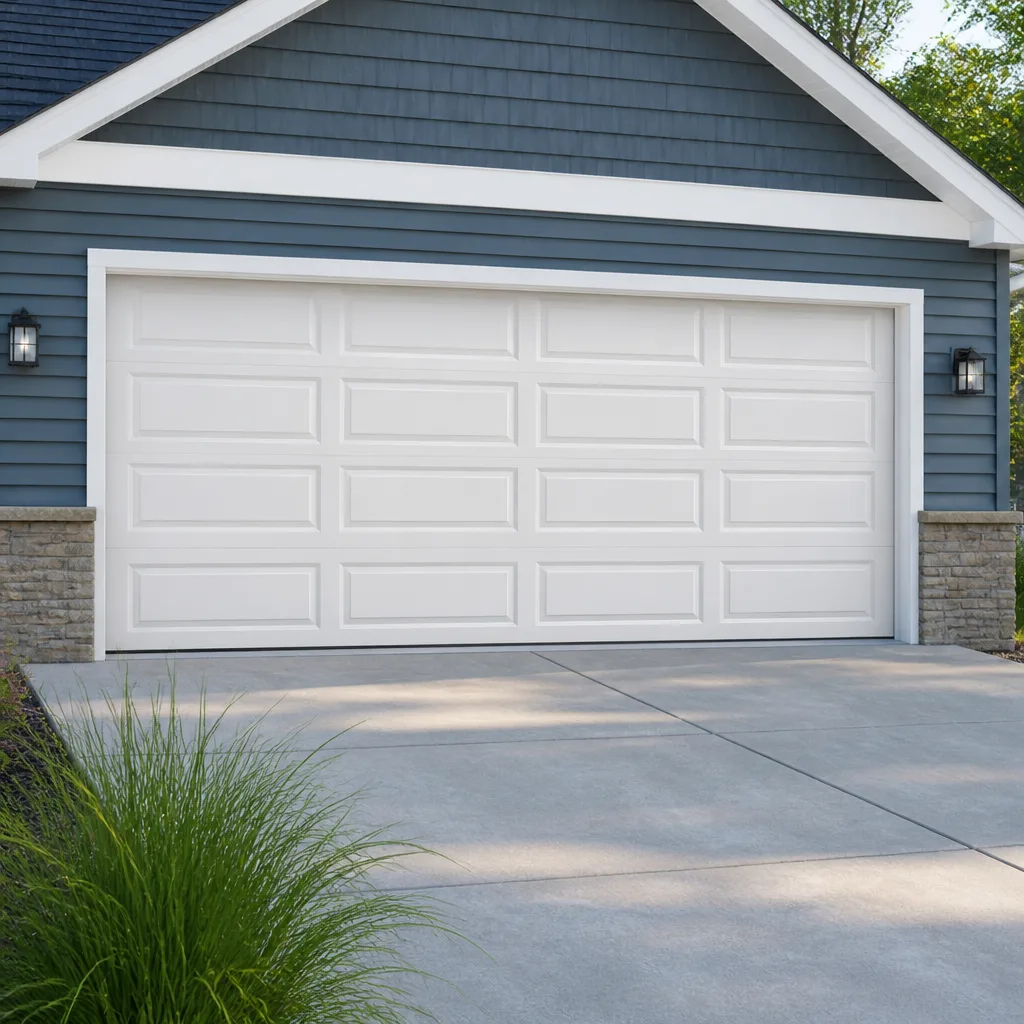 Raised-panel steel
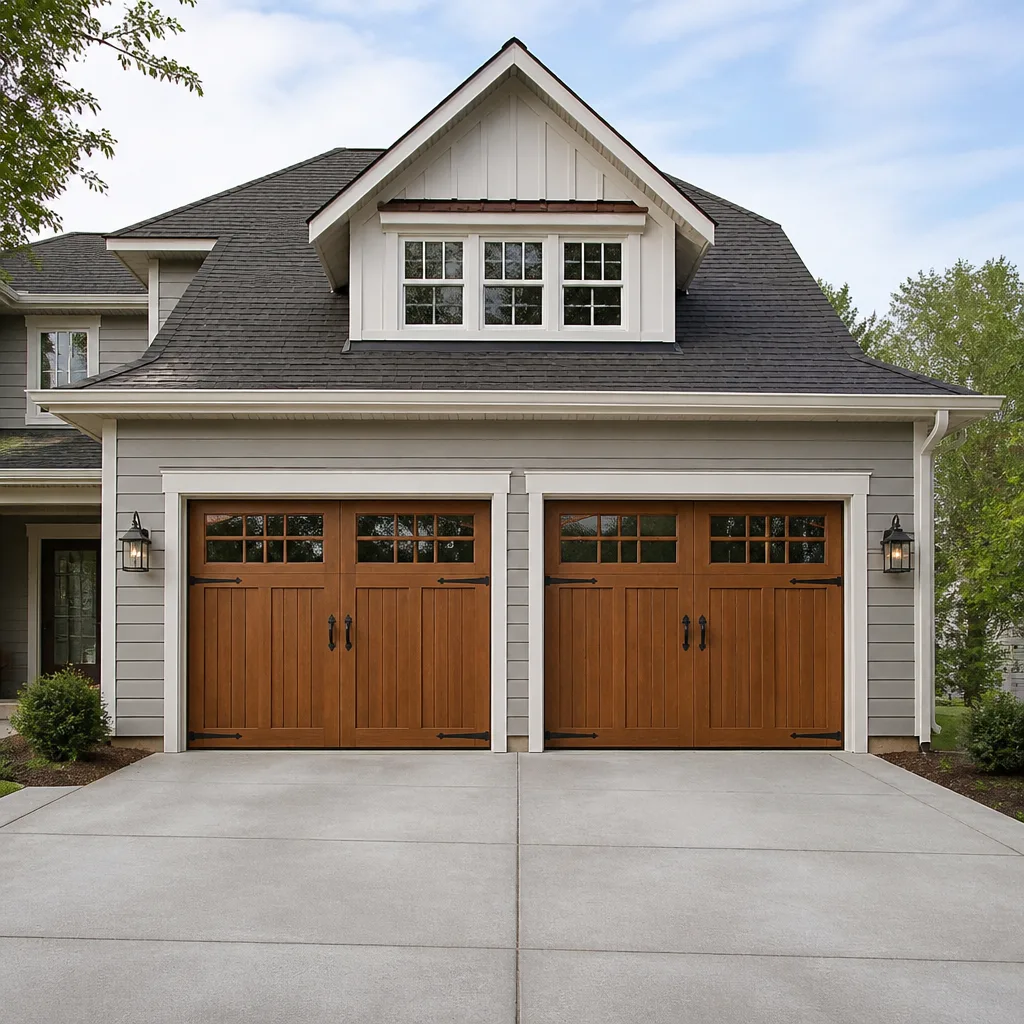 Carriage house
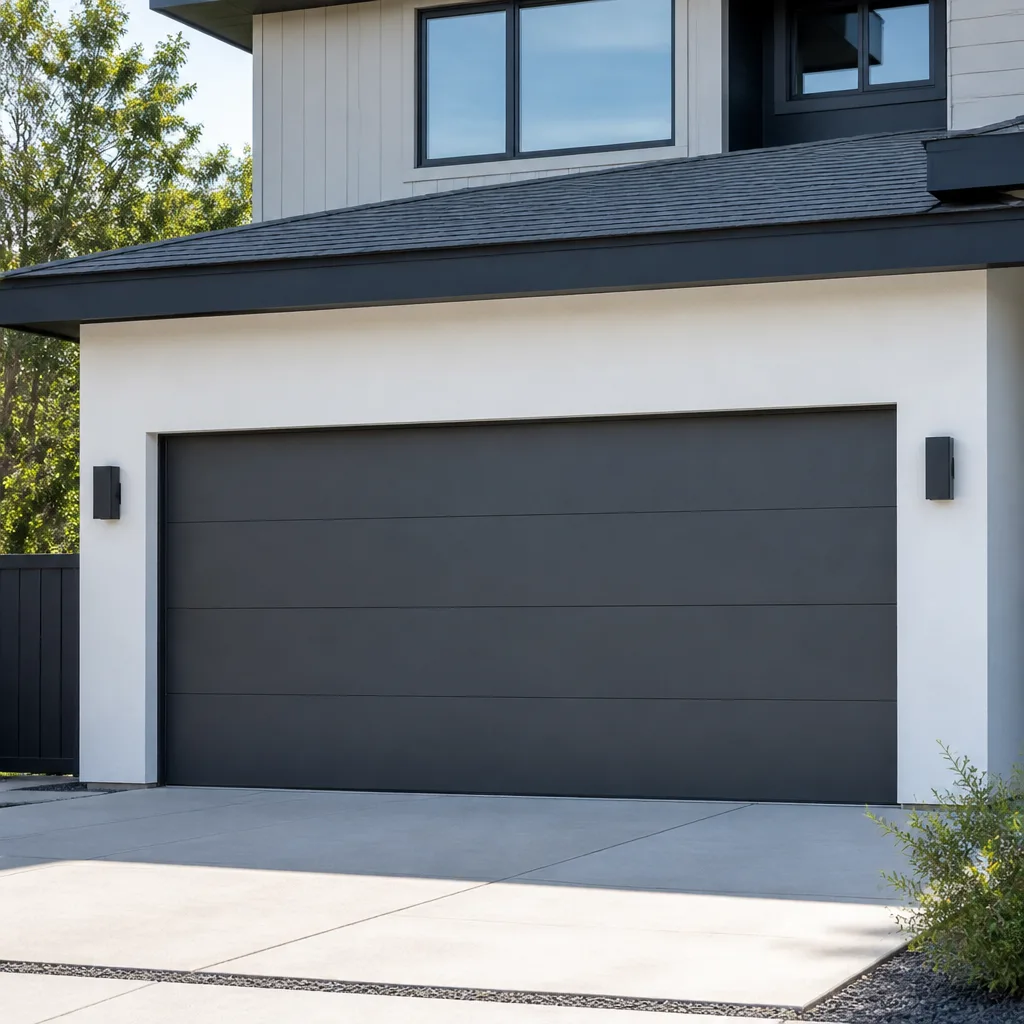 Modern flush
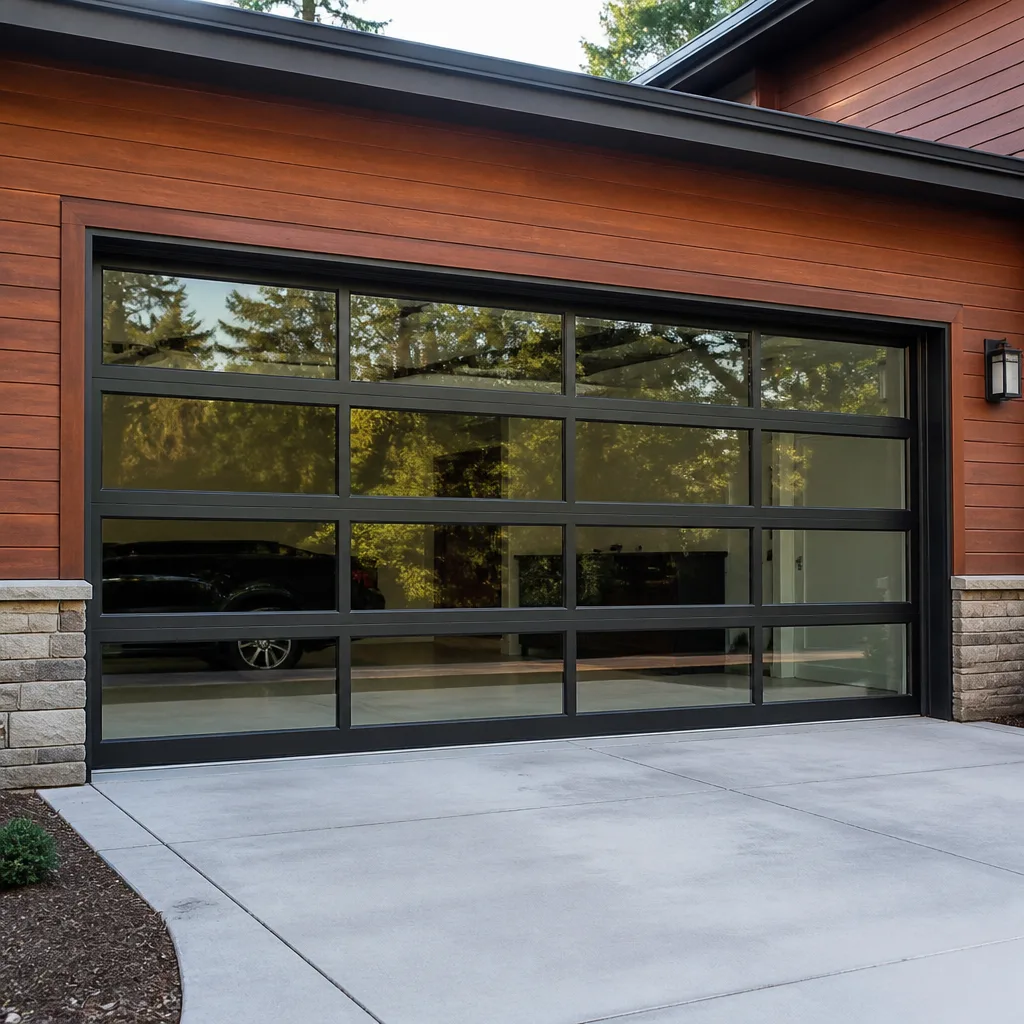 Full-view glass
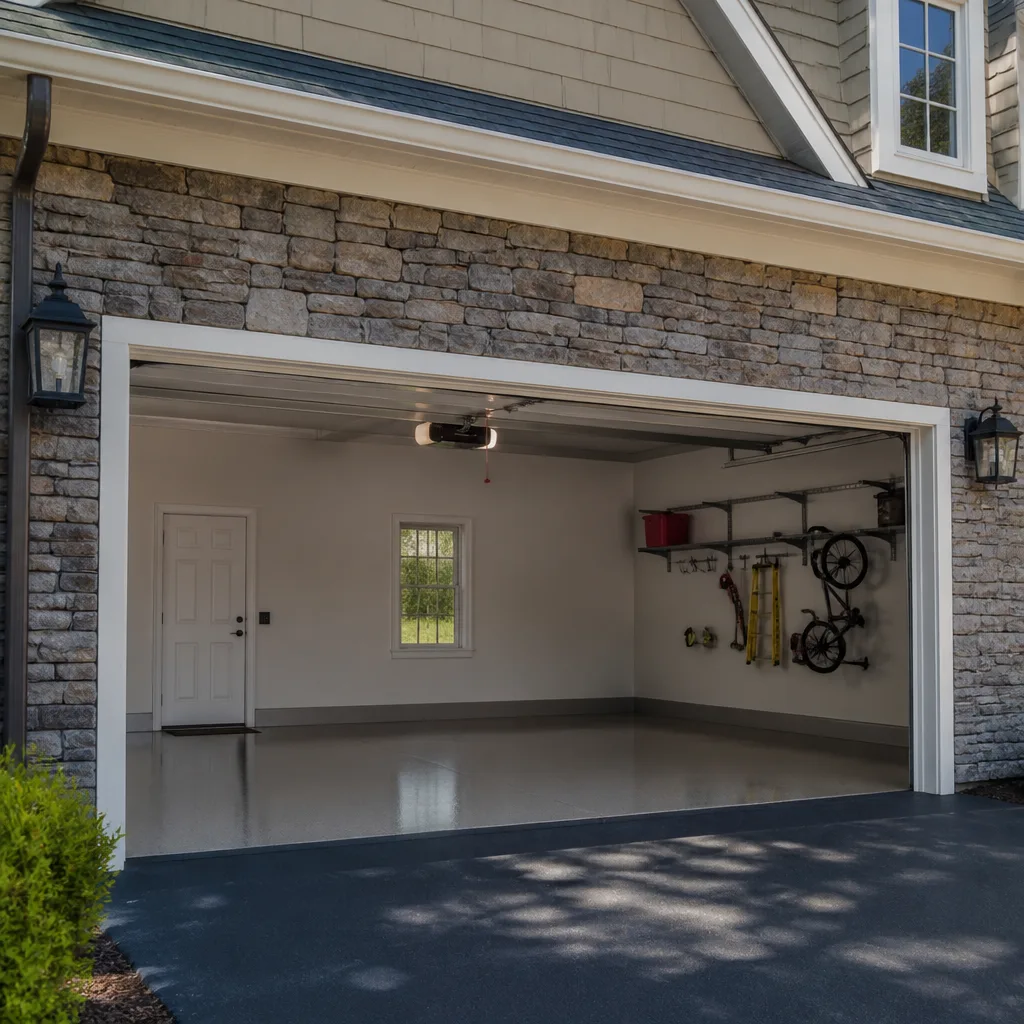 LiftMaster openers
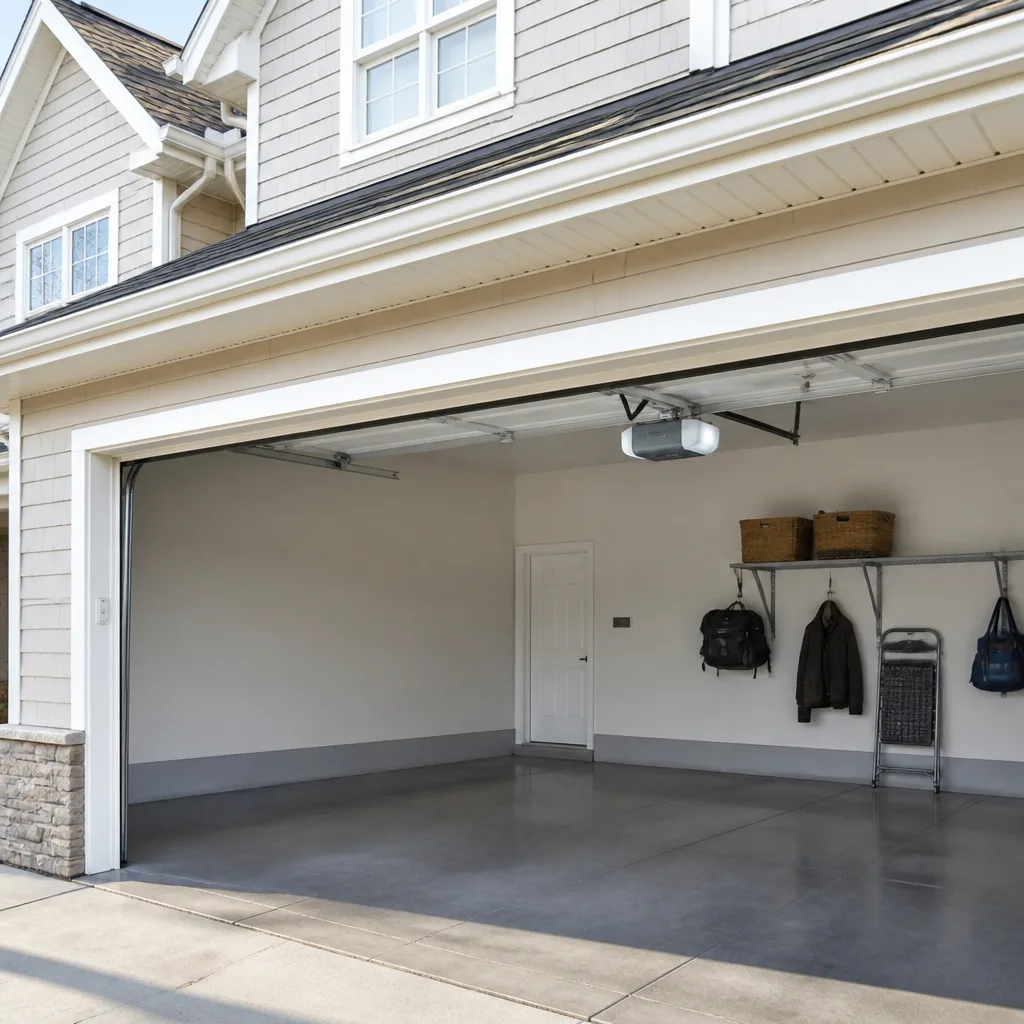 Chamberlain openers
Full 25-point door and opener safety check with every visit - springs, cables, rollers, tracks, and your LiftMaster or Chamberlain opener included
You get a price before we start. It does not change when the pro arrives.
Get your free estimateGarage Door Warning Signs: A Dunedin Homeowner’s Reference Guide
That grinding noise your garage door makes might be a $20 lubrication fix. It might also be a corroded spring on the edge of snapping under load. Same sound, two very different problems, and the difference matters because of where you live. Dunedin sits in a warm, humid climate that changes what “normal wear” looks and sounds like on a garage door. A symptom that means “needs a squirt of grease” in a dry mountain town often means “early-stage corrosion” here. This guide walks you through the warning signs homeowners in Dunedin actually run into, how to read them correctly, and the ones that mean you should stop using the door and call a professional.
Quick Answer
The warning signs of a failing garage door are unusual noises (grinding, popping, scraping), visible rust or corrosion on springs and tracks, slow or uneven movement, a door that won’t stay balanced halfway up, and an opener that strains or reverses unexpectedly. In Dunedin, humidity accelerates corrosion, so rust-colored wear on springs and cables deserves attention sooner than the same appearance would in a drier climate. Any sign that involves a broken spring, a frayed cable, or a door that slams down should be treated as urgent.
Styles & brands we work with
- Raised-panel steel
- Carriage house
- Modern flush
- Full-view glass
- LiftMaster openers
- Chamberlain openers
Table of Contents
- The Five Sounds a Dunedin Garage Door Makes (And What Each One Means)
- Rust and Corrosion: Reading the Patterns Correctly
- Slow or Uneven Movement: What’s DIY and What’s Not
- The 30-Second Balance Test for Your Springs
- How Florida Humidity Affects Door Balance
- Storm-Season Priorities: What to Fix First
- Opener Warning Signs You Shouldn’t Ignore
- Common Mistakes to Avoid
- When to Call a Professional
The Five Sounds a Dunedin Garage Door Makes (And What Each One Means)
Sound is the first warning sign most homeowners in Dunedin notice, and it’s also the most easily misread. The humid climate means a sound coming from a door here doesn’t always have the same cause as the identical sound coming from a door in a drier part of the country. Here are the five sounds we hear most often and what each one typically points to.
- A low grinding or rumbling. Usually dry or contaminated rollers and hinges, not a failing door. In Dunedin this sound is often the first sign that humidity has stripped lubrication faster than expected. Lubrication with a proper garage-door lubricant usually quiets it. If it comes back within a few weeks, corrosion is setting in and the rollers may need replacement.
- A sharp pop or snap. This is the sound of a torsion spring breaking or a cable letting go. Stop using the door immediately. A door held up only by a broken spring can drop, and a snapped cable can whip with real force. Do not attempt to open or close the door, and keep cars and people clear of it until a technician sees it.
- A scraping or rubbing. Almost always the door panel or a roller rubbing against the track. Sometimes the track has been bent or knocked out of alignment. Sometimes the door itself has warped, which is a real risk in Florida humidity because wood and some composite panels absorb moisture.
- A squeal or high-pitched screech. A dry bearing, a worn roller, or an opener gear that’s wearing. If the noise comes from the opener unit mounted at the ceiling rather than the door itself, the opener is the source, not the door.
- A rattle at the opener rail. Loose mounting hardware or a worn trolley. This one is usually a straightforward repair, but left alone it can stress the opener and shorten its life.
One habit worth building: listen to your door on a quiet morning once a month. You’ll notice a change in sound faster than you’ll notice a change in how it looks. If any of the five sounds above feels unfamiliar, that’s your cue to call. We answer 24/7, and we can talk through what you’re hearing before you decide whether it can wait.
Rust and Corrosion: Reading the Patterns Correctly
Rust on a garage door is common almost everywhere, but in Dunedin we see more of it, and the pattern matters more. The question isn’t “is there rust?” It’s “where is the rust?” and “how deep does it go?” Surface oxidation and structural corrosion look similar in a photograph but are vastly different in what they mean for safety.
Surface oxidation
This is the orange-brown film that develops on the surface of a spring, cable, or track when moisture sits on bare metal. Surface oxidation is cosmetic and manageable. It doesn’t weaken the component. You can usually slow it down and keep the part in service for years.
Structural corrosion
This is what happens when the metal underneath the surface has begun to lose its integrity. Look for pitting (small craters in the metal), flaking (rust that comes off in layers), or a swollen, tight look on a spring coil. Structural corrosion on a torsion spring is dangerous because the spring is under constant tension while it holds the full weight of the door. A spring that has lost material to corrosion can fail suddenly with no warning, which is why we treat pitted or flaking springs as a replacement, not a polish.
Where to look
- The spring coils above the door, especially where coils touch each other.
- The cable drums and the cable itself, particularly at the bottom corners of the door.
- The tracks, most often near the floor where moisture rises.
- Hinges and the bottom bracket, which are lower to the ground and get hit by splash and humidity first.
Cables deserve special mention because a corroded cable can fray. A frayed cable is a failure in progress: those strands aren’t coming back together, and the stress is rising on the ones that remain. If you see broken strands anywhere on a cable, stop using the door and call. Cables are under tension and are not something to handle without the right tools and training. The right move is a professional inspection; our garage door repair team will tell you whether a cable is due for replacement or just needs attention at the connection points.
Slow or Uneven Movement: What’s DIY and What’s Not
If your door moves slowly, stops partway, or travels unevenly, there are three underlying causes we see most often. Two of them you can manage yourself. One requires a technician, and it’s the one that homeowners tend to try to fix on their own. The distinction matters more in a humid climate, where the cause can shift from one category to another without the symptom changing.
DIY-manageable: lubrication and a sagging door
If the door is simply stiff, lubricating the rollers, hinges, and tracks (with a proper garage-door lubricant, not WD-40) can free it up noticeably. If the door sags slightly at one corner or the top, that’s usually a matter of adjusting the door’s brackets or the travel limits on the opener. We explain the opener side of that in our guide to garage door opener repair if you want to understand the settings before calling.
Requires professional attention: spring tension and balance
If the door rises unevenly, strains to close, or feels unusually heavy when you lift it by hand, the spring system may be out of balance. Spring adjustment and replacement is the single most dangerous part of garage door work. The springs are under extreme tension, and an adjustment done without the right tools can cause serious injury. This is a hard stop: don’t adjust springs yourself, even if a forum makes it sound simple. Spring tension is the domain of a specialty trade for a reason, and it’s why we keep garage door spring repair as its own dedicated service rather than folding it into general repair.
One more cause that shifts with the climate: in Dunedin, humidity can swell wood door panels and tighten composite panels enough to change how they ride in the tracks. Left too long, a swollen panel starts to bind, and binding accelerates the wear on everything downstream. If your door started moving slowly after a stretch of humid weather and lubrication doesn’t fix it, the door itself may have changed shape.
The 30-Second Balance Test for Your Springs
Your springs are what make a heavy door feel light. When they lose their strength, the opener has to lift the full weight on its own. You can check whether your springs are still doing their job with a quick test that doesn’t require any tools. Do this approximately once a month, with the opener disconnected from the door.
- Close the door fully and pull the emergency release handle (the red cord hanging from the opener rail) so the opener is no longer connected to the door.
- Lift the door by hand about halfway up, to around waist height.
- Let go slowly. A well-balanced door will stay where you put it, or drift only slightly.
- If the door drops, the springs have lost tension and the door is now heavier than your opener was designed to lift.
- Reconnect the opener by pulling the release cord again once you’ve stepped clear.
If the door doesn’t hold its position, that’s a real warning sign. A door that has lost spring tension will work your opener harder every single cycle, and openers do fail from that strain. A door that drops noticeably also isn’t safe to be under. This is the point to call a professional, not to adjust anything yourself. Springs under tension should only be handled by a trained technician.
How Florida Humidity Affects Door Balance
Humidity doesn’t break springs by itself. What it does is change the conditions those springs work in, and over months that has consequences. In Dunedin, moisture in the air affects the door in three main ways, and each one shifts the balance of the whole system.
Lubrication washes out faster
Standard oils can carry away or thin out in high humidity, which is why a door that felt smooth in cooler, drier weather starts to feel stiff. Use a lubricant designed for garage door hardware, which holds up better in humid conditions.
Wood and composite panels swell
Wood doors absorb moisture and swell, particularly at the edges and around the bottom panel. When that happens, the door binds in the tracks, and the spring and opener both have to work harder. If a wood door is your goal, a technician can advise on panels and hardware that handle humidity better. We service doors from Clopay, Amarr, and Wayne Dalton, so we’re familiar with how those specific brands age in this climate.
Rollers wear differently
Nylon rollers, which are the standard, can become brittle over time under repeated humidity and heat cycling. A brittle roller is more likely to crack or flat-spot, and that shows up as a jolt during travel or a thump sound at a particular point in the track.
None of this is a reason to panic. It’s a reason to inspect and lubricate on a schedule rather than react only when something breaks. If you’re in Dunedin and you’re not sure whether your door is on the “just needs attention” side or the “needs a technician” side, call us. We can talk through what you’re seeing and set up an appointment if needed.
Storm-Season Priorities: What to Fix First
Storm season changes the priority of some warning signs for homeowners in Dunedin. A repair that could wait in January is a repair to finish before a named storm approaches. Wind and heavy rain stress a garage door more than normal weather does, and a door that’s already struggling is more likely to fail when the storm hits. Here’s how we’d rank the work.
Fix before a storm arrives
- Any sign of a weakening spring. A spring that’s showing corrosion, popping, or losing balance is at real risk of failing under the extra load of storm preparation and repeated cycling. This is the top item on the list.
- A door that doesn’t close flush. A gap at the bottom lets wind-driven rain in and lets the wind itself push against the door. Close the door and check whether the bottom seal actually seals.
- Loose or missing bottom brackets and hinges. A loose hinge is a weak point that storm-wind pressure will find.
- An opener showing strain. A door that’s already heavy is exactly the door you don’t want to trust when the power is flickering or you need the door to close reliably.
Can wait until after the storm
- Cosmetic rust or peeling paint on panels.
- A slightly noisy roller that isn’t affecting operation.
- A cosmetic dent or ding.
If you’re in Dunedin and a repair is halfway done when a storm warning comes up, call us and we’ll help you decide whether it needs to be finished before landfall. We answer 24/7. Fast dispatch from 7am to 7pm, Sunday through Friday. We’re closed on Saturday, so if a door fails on a Saturday afternoon, call and we’ll get you scheduled for Sunday. Emergency service is a genuine part of what we do, not a sign on the side of a van. If a spring has broken, the door is stuck open, or the opener has failed suddenly, call us and tell us what’s happened.
Opener Warning Signs You Shouldn’t Ignore
An opener that’s failing usually warns you before it gives up completely. It’s tempting to treat those warnings as quirks, especially when the door still opens every time you press the button. But repeated strain on an opener eventually becomes a complete failure, and the signs are consistent from brand to brand. We work on LiftMaster, Chamberlain, Genie, and Craftsman openers among others, so we’ve seen how each one ages, and each one shows warning signs in its own way.
- The door reverses unexpectedly. Sometimes this is a safety sensor problem (misalignment, debris, or a failing sensor). Sometimes it’s a sign of a burned-out logic board. Either way it needs attention before the door fails closed or refuses to reopen.
- The remote only works from close range. In an opener, this is usually a sign of a weakening battery, or a failing antenna. In humid climate, moisture in the remote or the outdoor keypad can cause it, so replace the battery first and see if that resolves it.
- The opener runs but the door doesn’t move. The trolley may have disconnected from the door, or a gear has stripped. This is a straightforward repair by a technician but not something to force.
- The light flashes in a pattern. Most openers have a diagnostic light code, and if you look up the code on the manufacturer’s documentation, you’ll find out what fault the opener has detected. We can decode it if you’d rather just call.
- The opener heats up or runs longer than it should. Often this means the door is binding or the spring has lost tension, and the opener is laboring to lift the door. Fix the door, not just the opener.
One thing we’d point out: some symptoms look like opener failures but are actually door problems. If a technician only diagnoses the opener and not the door, you can end up paying for a new motor when what you needed was a balanced door. Our single-trade focus means we look at the whole system, not just the motor.
Common Mistakes to Avoid
- Assuming all rust is cosmetic. In Dunedin’s humidity, surface oxidation can hide pitting corrosion underneath. If you can’t tell the difference, have a technician look at it. The cost of an inspection is far less than the cost of a spring failure.
- Adjusting springs yourself. We can’t say this strongly enough: torsion springs are under extreme tension, and an adjustment done without the correct tools and training is a serious injury risk. No amount of YouTube preparation makes this a safe DIY job.
- Ignoring a door that drops in the balance test. A door that doesn’t hold its position is going to stress your opener every cycle. Fix the springs, not just the opener.
- Using WD-40 as a garage door lubricant. WD-40 is a solvent, not a long-term lubricant. On a humid-climate door, it can actually strip the proper grease and leave the hardware drier than it started.
- Waiting until storm season to think about repairs. The repair that keeps the door operational in a storm is the one done before the storm arrives. If you know a spring is suspect, schedule it before the forecast gets interesting.
- Trusting a general handyman with a garage door problem. A garage door is a system with springs, cables, tracks, and an opener, all balanced against each other. A generalist can handle the door, but the diagnostic skills for the system come from doing garage door work exclusively.
- Replacing the opener when the door was the problem. If your opener is struggling, the first thing a technician should check is the door’s balance. Replace the motor when the motor has failed, not when the door is heavy.
When to Call a Professional
Call a professional immediately if you hear a snap or pop from above the door, see a frayed cable, notice a door that drops on its own, or smell anything burning near the opener. These are urgent, and using the door before it’s checked is a safety risk. Call a professional promptly for spring corrosion, uneven movement that lubrication doesn’t fix, or an opener that reverses unexpectedly. And call us for routine questions: sometimes the answer is a small repair, and we’ll tell you that too. If you’re in Dunedin and want a straight diagnosis before anything is touched, Garage Door Repair Dunedin offers free estimates. Call (877) 492-3256. We answer 24/7. Fast dispatch from 7am to 7pm, Sunday through Friday.
See the difference
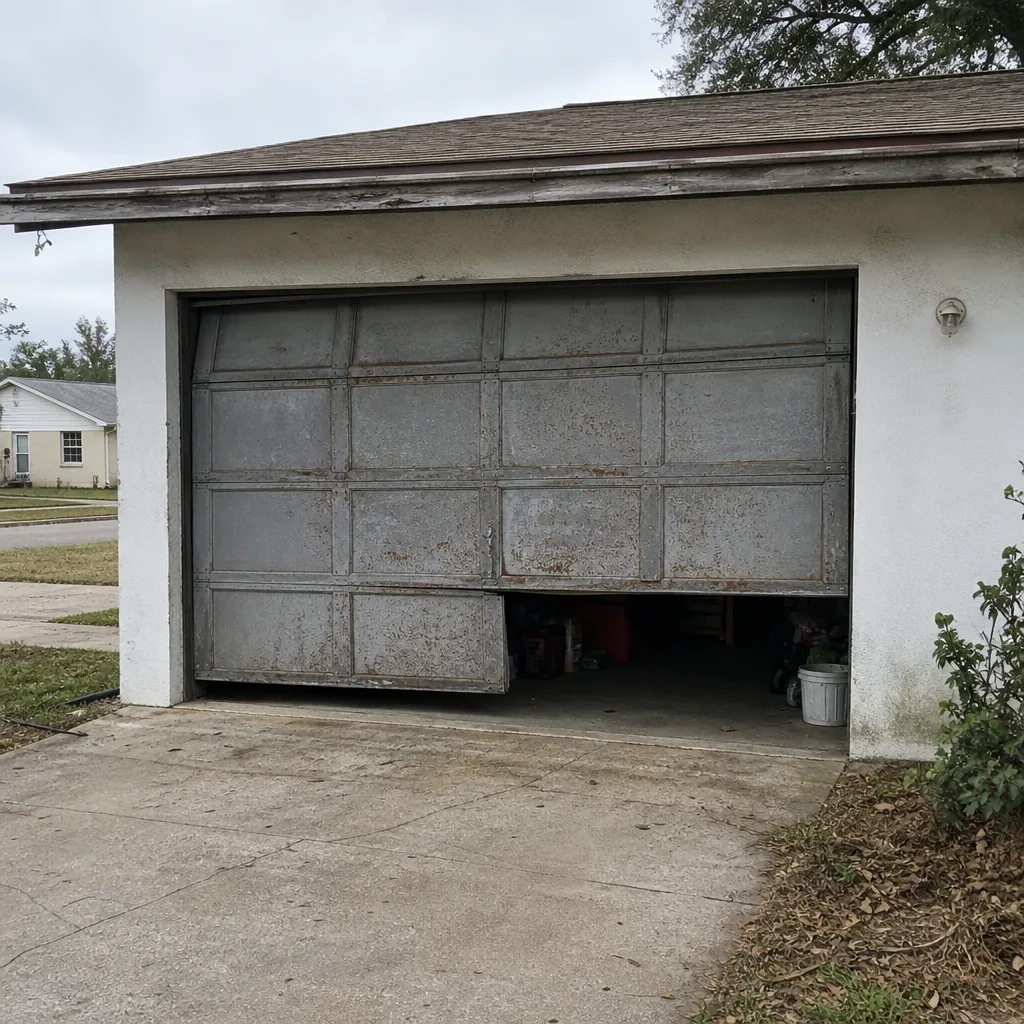 Before
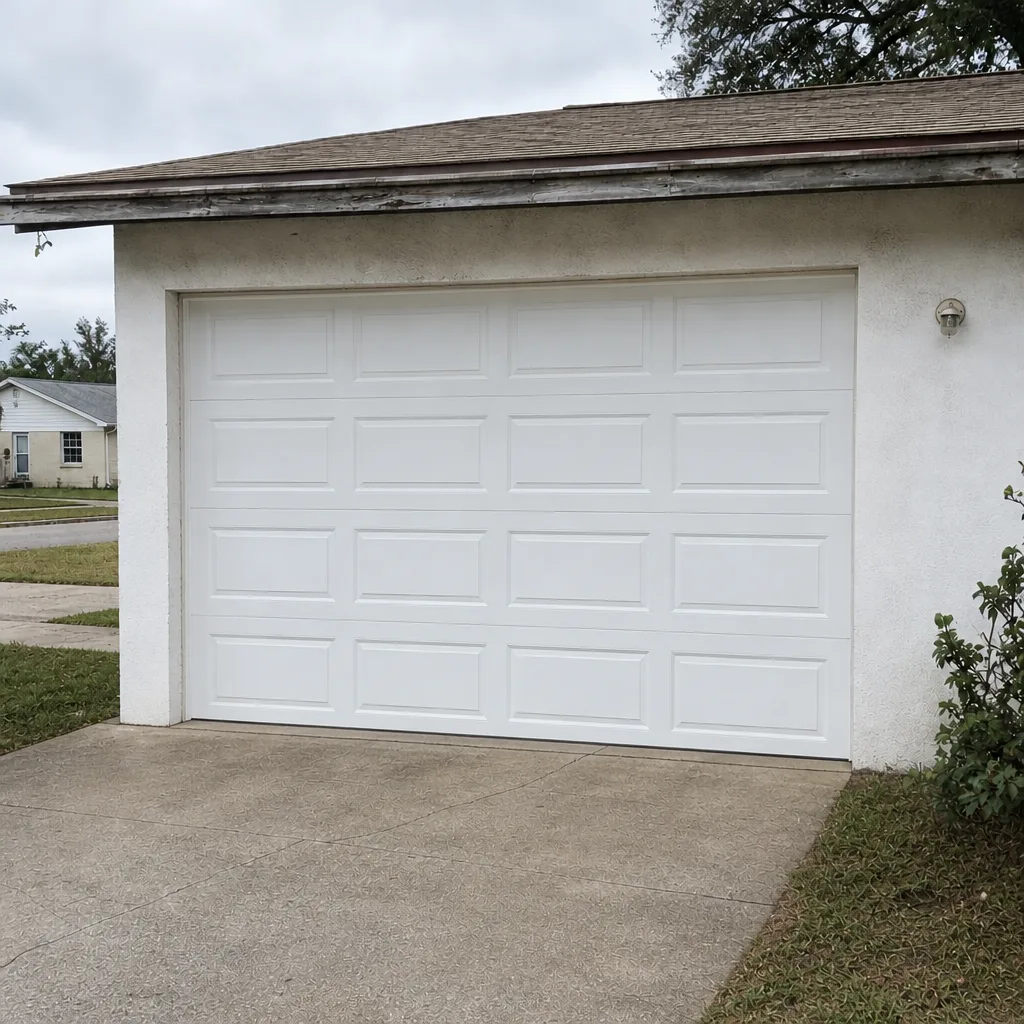 After
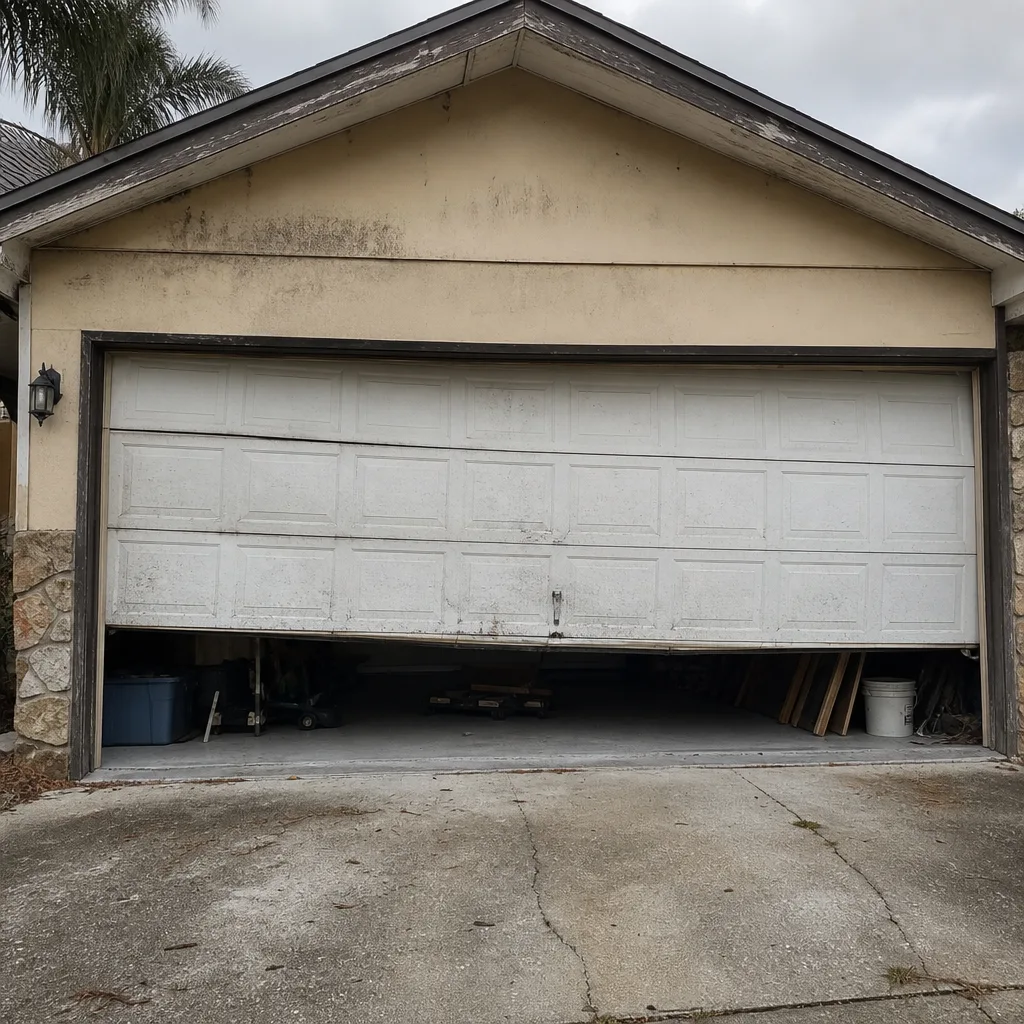 Before
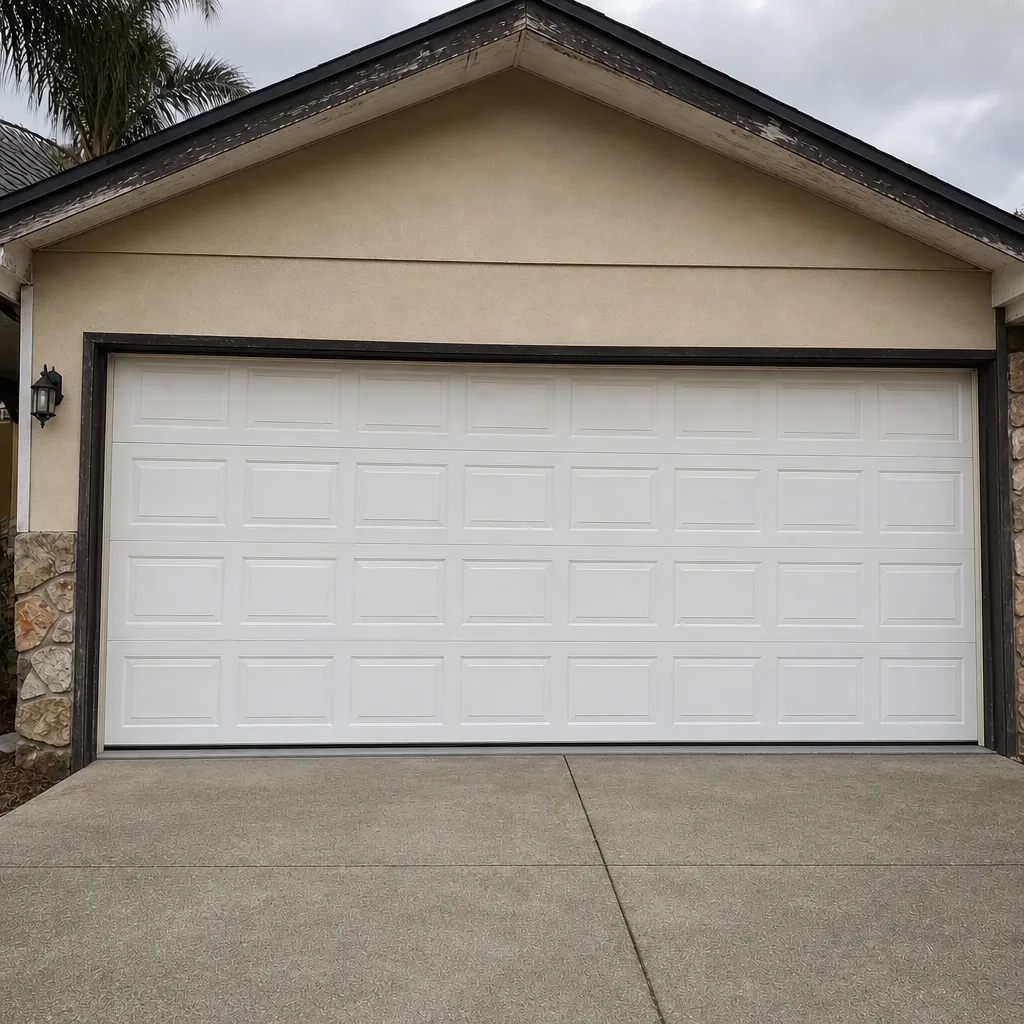 After
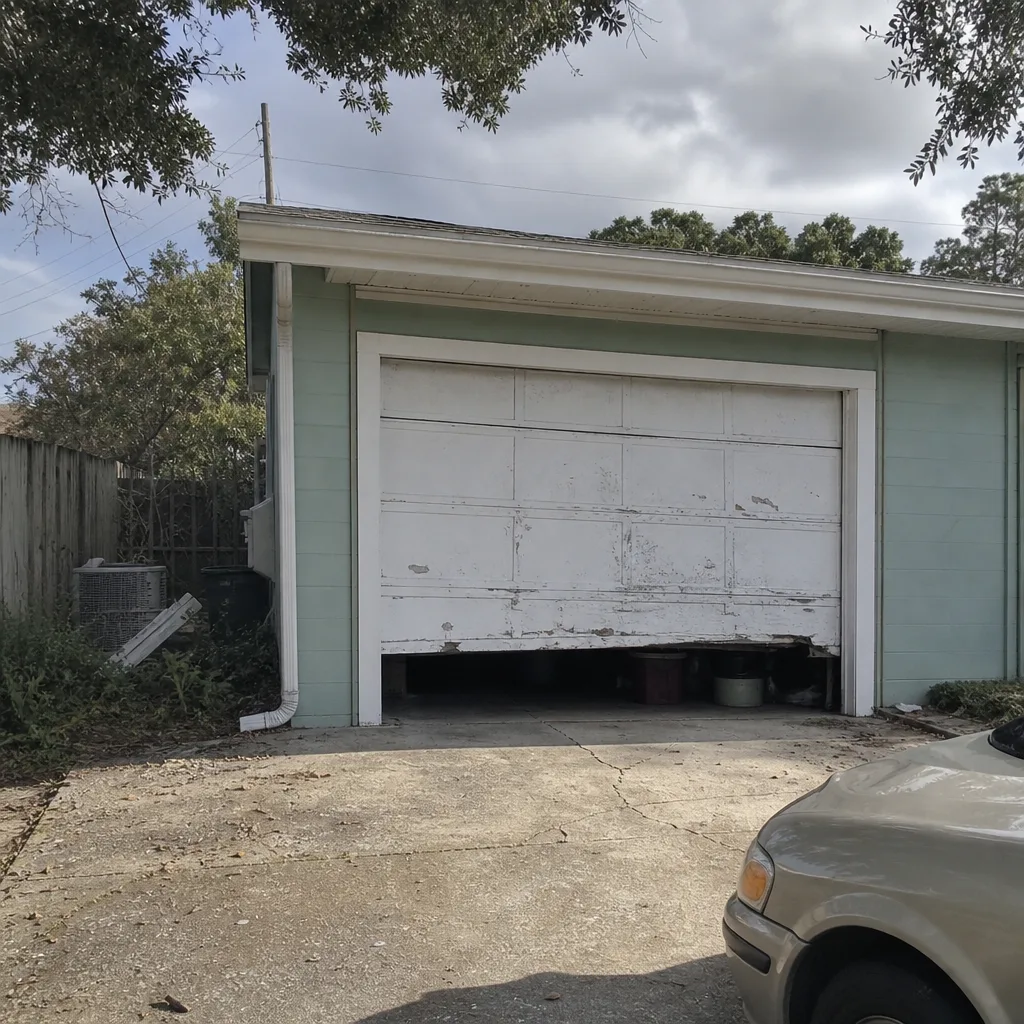 Before
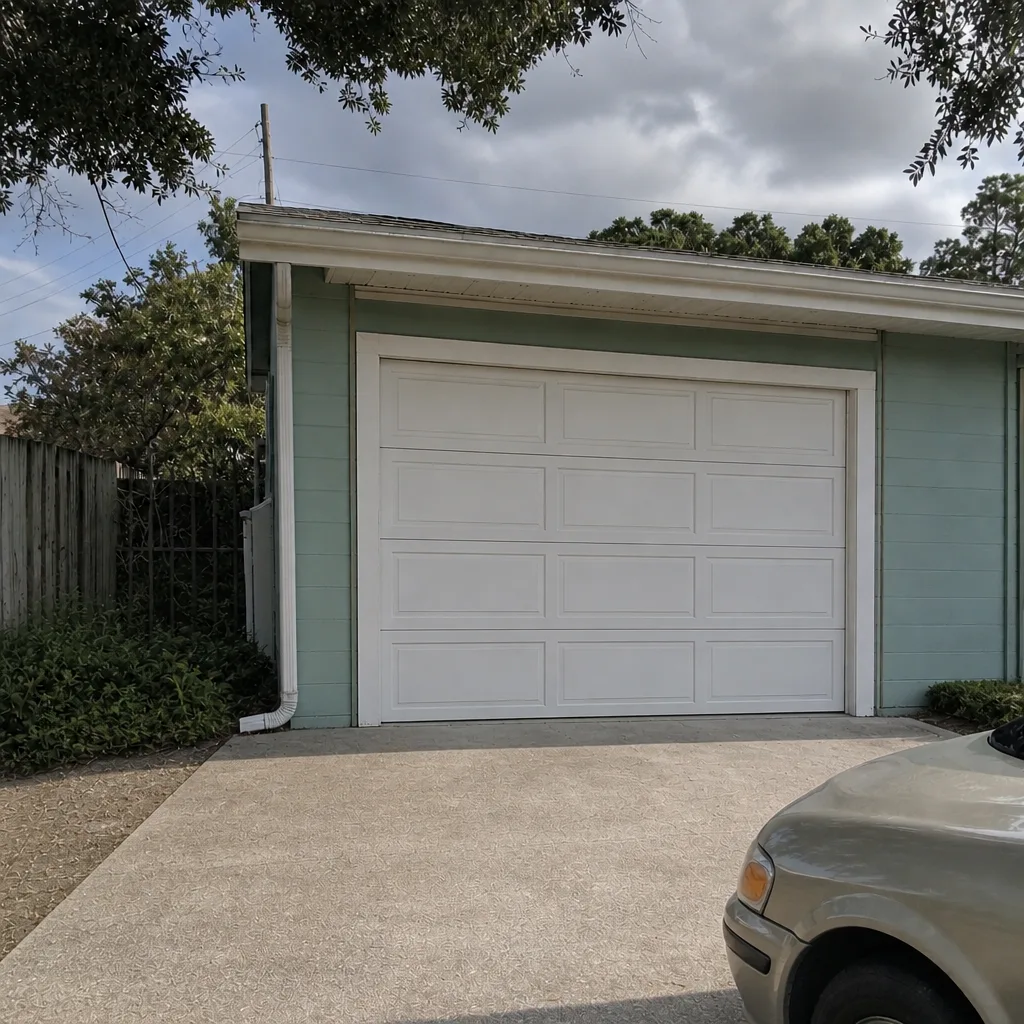 After
Frequently Asked Questions
The most common signs are unusual sounds (grinding, popping, scraping), visible rust or corrosion on springs and tracks, slow or uneven movement, a door that won’t hold its position in the balance test, and an opener that reverses or strains. In Dunedin, the humidity means corrosion progresses faster than it would in a drier climate, so rust-colored wear is worth checking sooner. Call (877) 492-3256 to talk through what you’re seeing.
A torsion spring gives warning signs: surface rust that has progressed to pitting or flaking, a visible gap between coils, and a door that doesn’t hold its position in the balance test. Sometimes there’s no warning before a spring snaps. If you see any of the signs above, have a technician inspect it. Never use the door with a spring that’s clearly lost tension. Call (877) 492-3256 for an assessment.
You can handle lubrication of rollers and hinges, and you can perform the balance test yourself, which is just observation. Anything involving spring adjustment, cable replacement, or opener logic board replacement should be done by a professional. The spring system is under extreme tension and is genuinely dangerous to handle without training and the right tools. Call (877) 492-3256 if you’re unsure which side of that line you’re on.
Yes, humidity speeds up corrosion on springs and cables, swells wood and composite door panels, and can thin out standard lubricants faster than in drier climates. The practical result is that you want to inspect and lubricate more often than a homeowner in a dry climate. If your door is starting to bind or feel heavy in summer, that’s a real signal. Call (877) 492-3256 for a free estimate in Dunedin.
We work on the major brands homeowners in Dunedin have on their doors and openers, including LiftMaster, Chamberlain, Genie, Clopay, Amarr, Wayne Dalton, Craftsman, and Raynor. Knowing how each brand’s hardware and openers age lets us diagnose problems faster and get the right part the first time. Call (877) 492-3256 whether your unit is one of these or another brand.
For many repairs, yes. Spring and cable replacements, most opener failures, and track adjustments can often be done in a single visit. When a part needs to be ordered for a specific brand or model, it can take longer, and a technician will tell you what to expect before starting. For a full door replacement, that work is measured and scheduled, not squeezed into a same-day slot. Call (877) 492-3256 to discuss timing.
The Bottom Line
Garage door warning signs are the same types of symptom everywhere, but in Dunedin they present through a humid climate that makes corrosion faster, door balance trickier, and storm-season timing more consequential. The signs worth acting on early are the ones pointing at spring corrosion, uneven movement, and a door that fails the balance test. The ones you can manage yourself are lubrication and observation. Do the 30-second balance test monthly, listen to the door on a quiet morning, and call before a warning sign turns into a failure. Our technicians have up to 8 years of experience, and if you ever want a straight answer, our team is a call away.
Written by the team at Garage Door Repair Dunedin.