
Last updated November 22, 2026
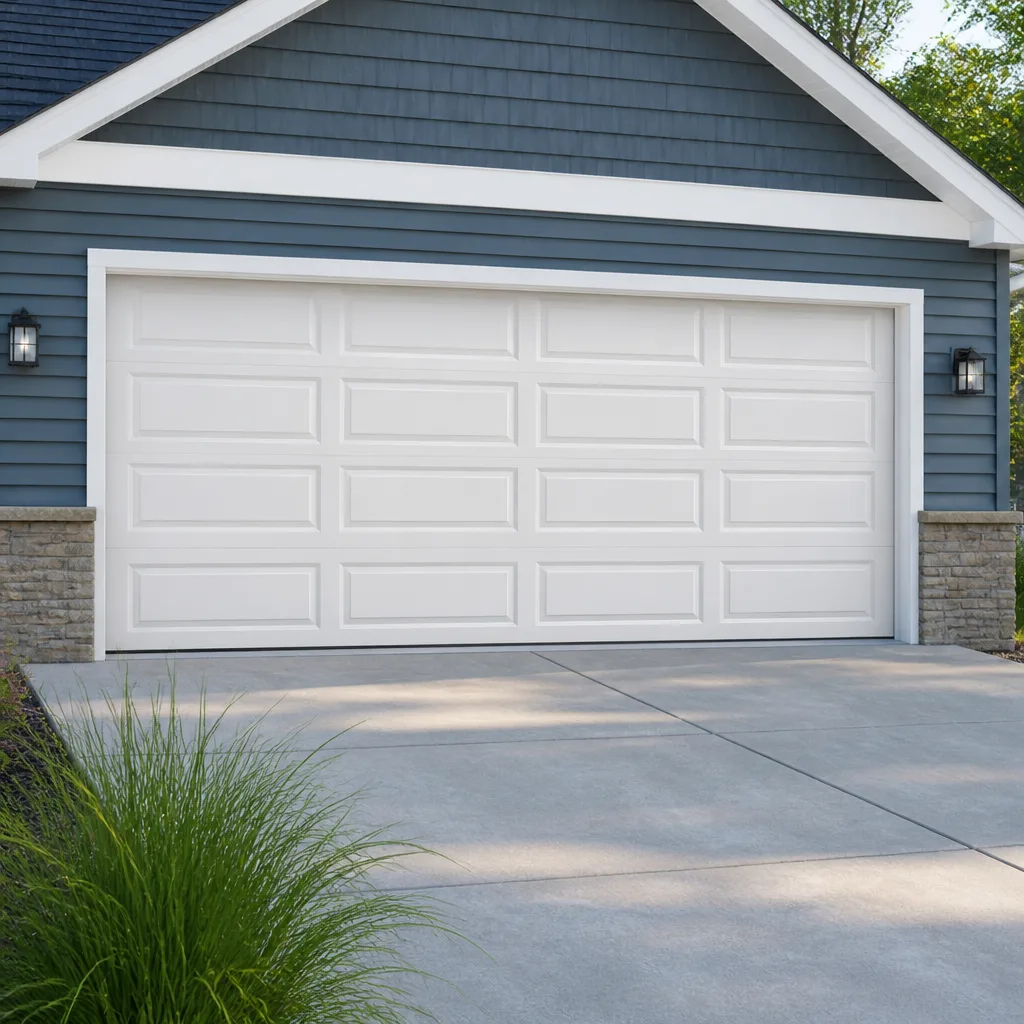 Raised-panel steel
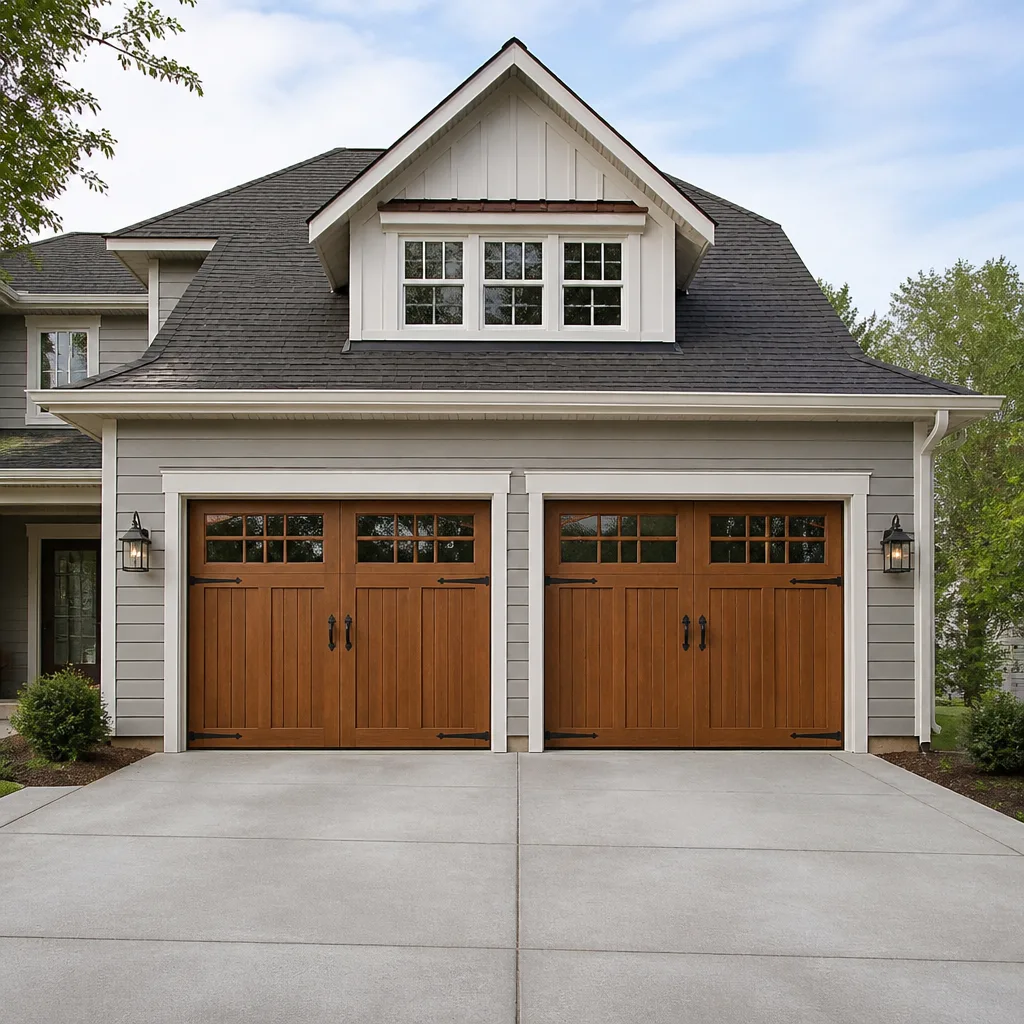 Carriage house
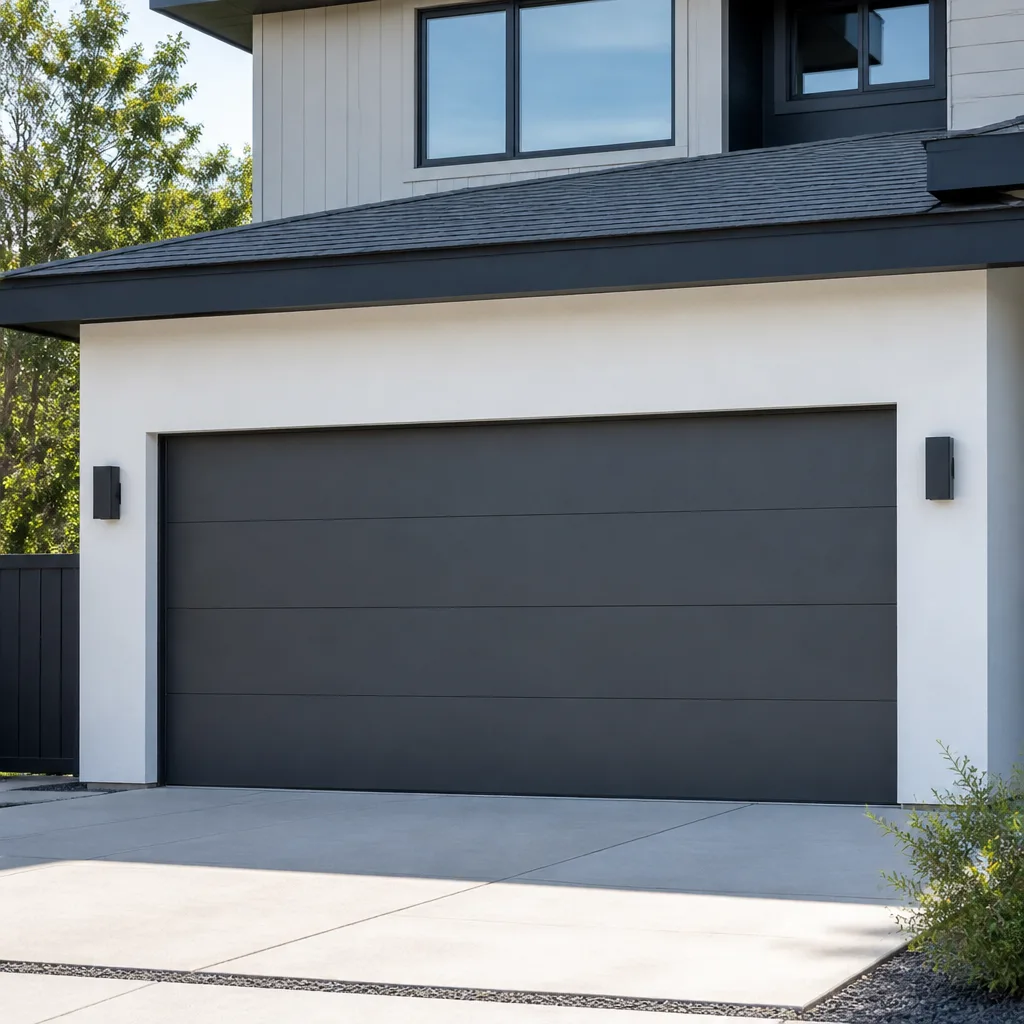 Modern flush
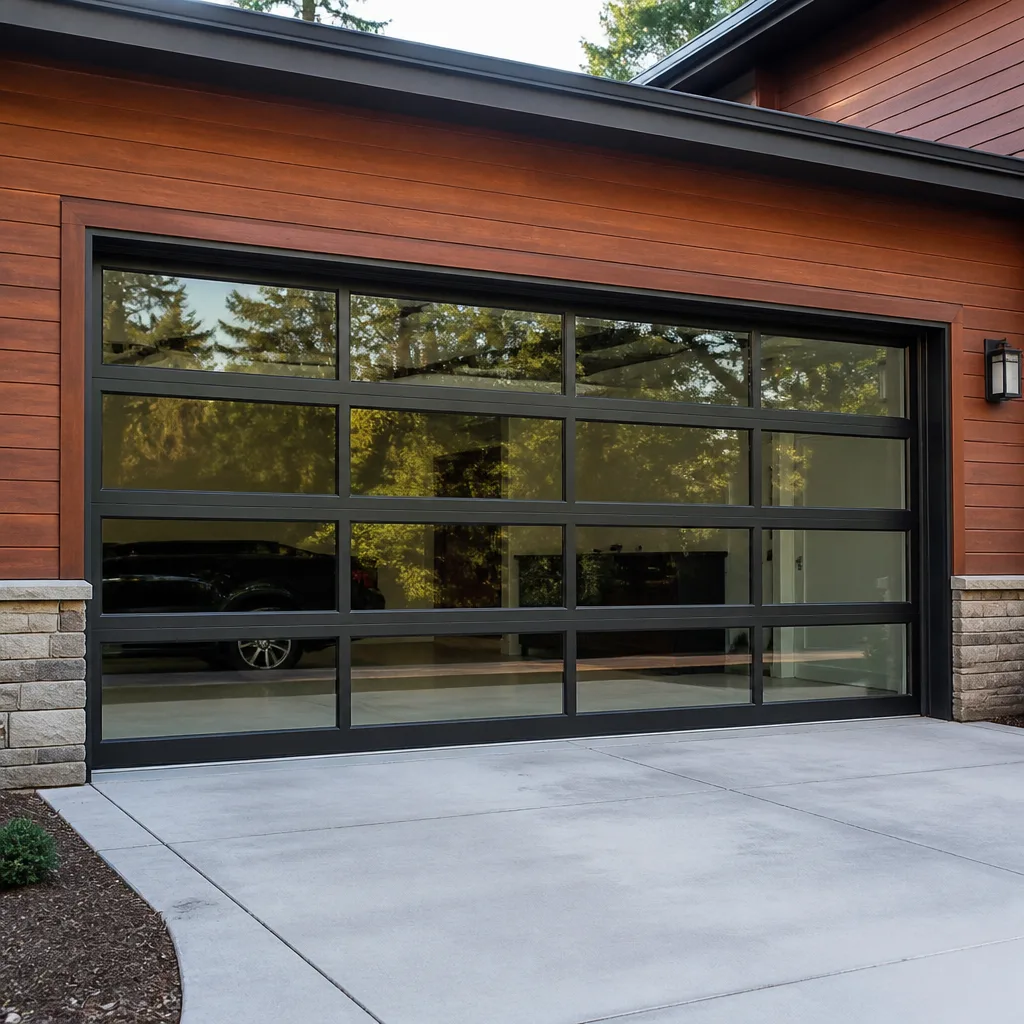 Full-view glass
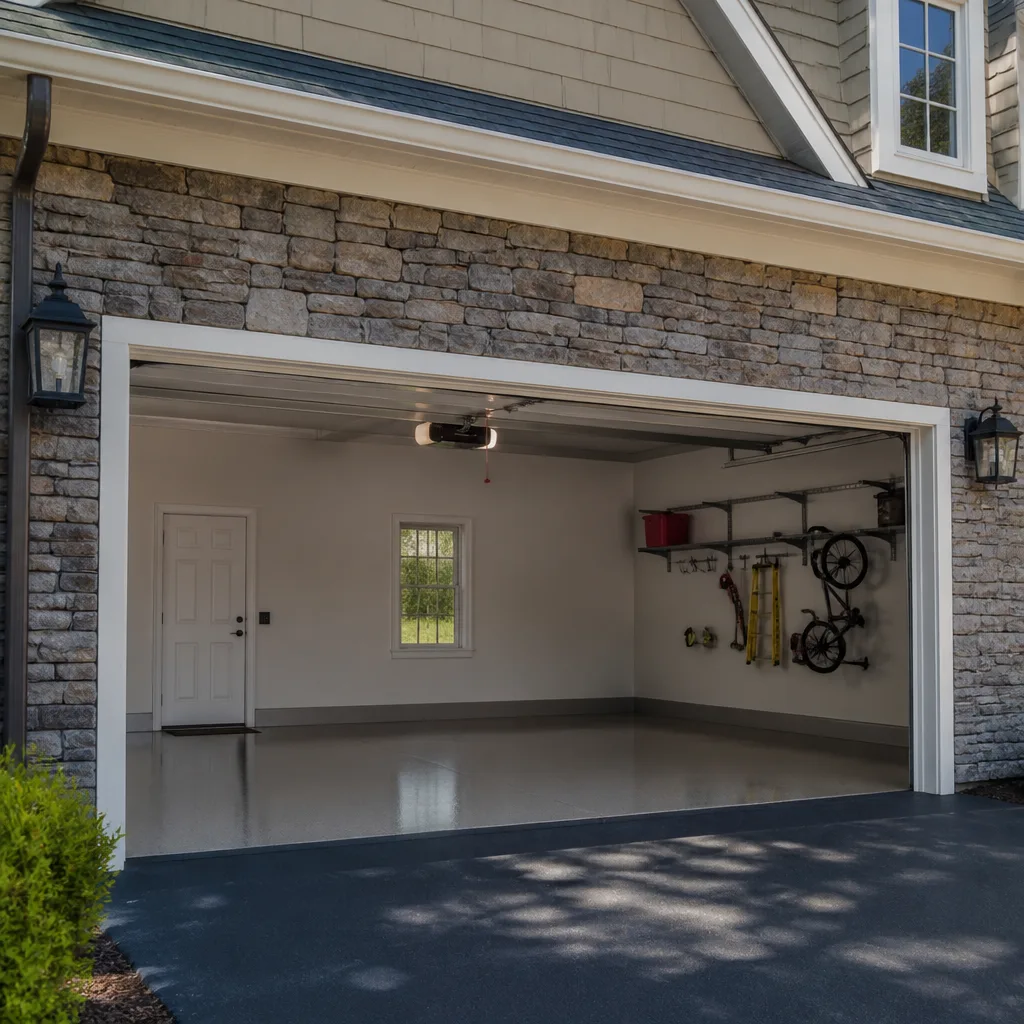 LiftMaster openers
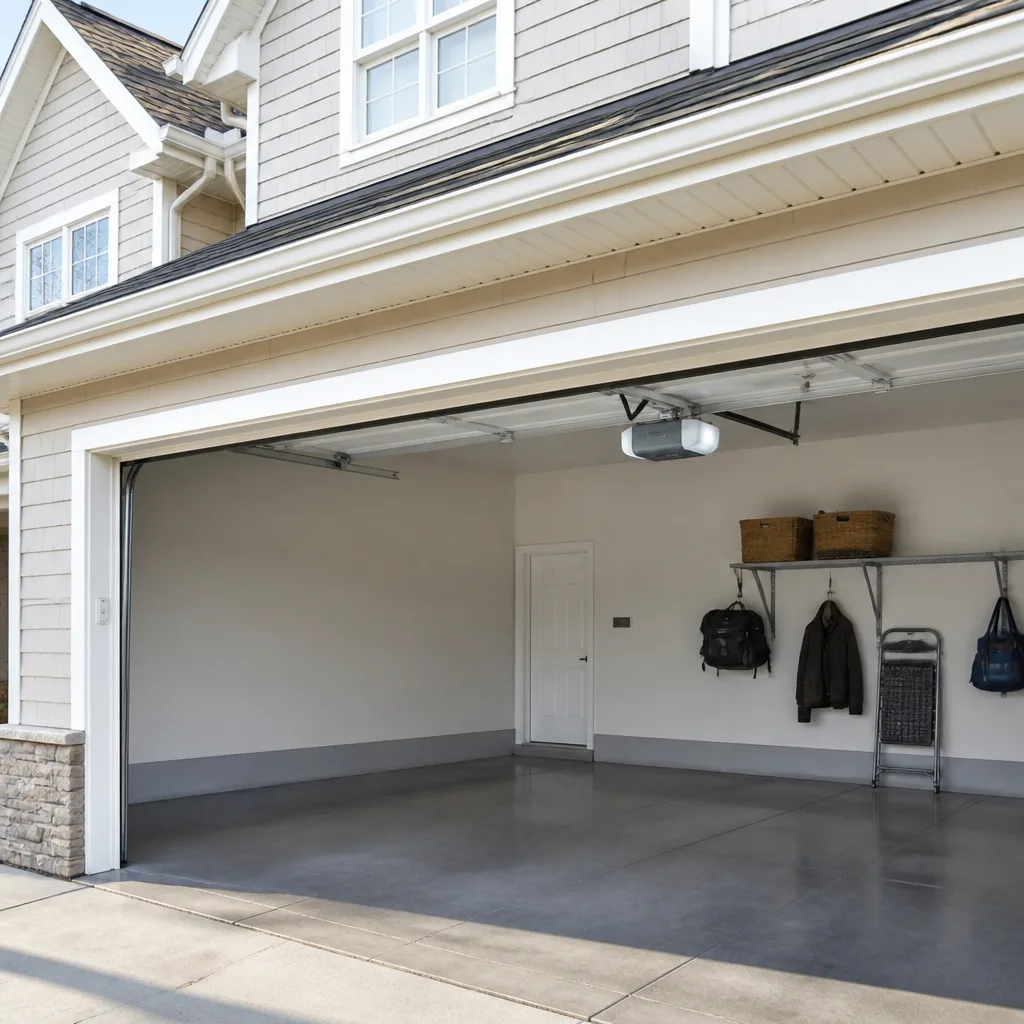 Chamberlain openers
Full 25-point door and opener safety check with every visit - springs, cables, rollers, tracks, and your LiftMaster or Chamberlain opener included
You get a price before we start. It does not change when the pro arrives.
Get your free estimateThe Complete Guide to Garage Doors in Dunedin
Most garage door advice you read online was written for Ohio, Minnesota, or some other place with hard winters and dry summers. Follow that advice in Dunedin and you’ll be tightening loose hinges and scraping rust off your tracks twice as often as your neighbors in the Midwest, and you’ll wonder why your panels look tired after a few short years. The Pacific Northwest climate and the Gulf Coast humidity here put different demands on a garage door than temperature swings do. This guide starts from the conditions you actually live in. You’ll learn how to read a door’s wind rating, why insulation matters more for moisture than for warmth, which components wear out fastest in Dunedin, and how to plan for replacement instead of reacting to a breakdown.
Quick Answer
A garage door in Dunedin needs wind-load-rated hardware and regular inspection of springs, tracks, rollers, and hinges because the local humidity, wind exposure, and driving rain wear those parts faster than in drier climates. Buy or maintain the door with wind rating, corrosion-resistant materials, and insulation matched to your property’s HOA and Pinellas County code requirements, and budget for spring replacement every several years rather than every decade. Professional inspection once a year is the single most reliable way to avoid a stuck door.
Styles & brands we work with
- Raised-panel steel
- Carriage house
- Modern flush
- Full-view glass
- LiftMaster openers
- Chamberlain openers
Table of Contents
- How Dunedin’s Climate Affects Your Garage Door
- Wind-Load Ratings Explained
- Why Insulation Matters More Here Than Anywhere Else
- Reading HOA Guidelines and Pinellas County Codes
- Realistic Lifespan for Each Component
- Springs: The Part That Fails First
- Choosing and Maintaining an Opener
- A Realistic Maintenance Schedule
How Dunedin’s Climate Affects Your Garage Door
Humidity, rain, wind, and salt in the air do more damage to garage door hardware in Dunedin than temperature alone ever could. Every metal part on a garage door – springs, cables, hinges, rollers, tracks, and the bottom brackets – is exposed to moisture that sits on the surface and works its way into joints. When you combine that with wind-blown grit and a marine-influenced atmosphere, wear accelerates. Springs that would last ten or twelve years in a dry climate often show their first signs of failure after half that time here.
The practical consequences drive everything else in this guide:
- Corrosion. Standard galvanized hardware corrodes faster when moist air stays on it. Stainless steel and nylon-coated components hold up better. Anywhere two metal pieces touch, moisture gets trapped and rust starts.
- Warping panels. Wood and wood-composite doors absorb humidity and distort. Steel and aluminum doors resist warping, but the paint finish has to be intact to prevent rust.
- Track swelling. Wet wood framing around the door opening can swell and push the track out of alignment.
- Openers under strain. A door that’s slightly off-balance because of rusted rollers makes the opener work harder, which shortens its life.
What this means in practice: inspect your door every year in Dunedin, and expect to replace springs, rollers, and hinges on a shorter cycle than the national averages you find online. If you’re in older neighborhoods like downtown Dunedin, Dunedin Isles, or along Edgewater Drive, you’re dealing with mature tree cover and nearby water, which means slightly more organic debris in the tracks and more consistent moisture exposure.
Wind-Load Ratings Explained
Wind-load rating tells you how much wind pressure a garage door is engineered to resist without failing, and in Dunedin it’s the single most important specification on a new door. Garage doors fail catastrophically in high winds, and a failed door lets wind and water into the house, which is why building codes in vulnerable areas require doors that meet specific pressure ratings. Near Dunedin’s coast and on exposed lots, a standard residential door may not be enough.
Wind ratings are expressed in pounds per square foot (psf) or in design pressure. Standard residential doors are often rated in the range of roughly 20 to 30 psf, while doors in higher-wind zones may be rated to 50 psf or more. The exact requirement for your address depends on your location, so ask your city’s building department before ordering any door.
Here’s how to read a wind rating in plain terms:
- Find the label. A rated door carries a permanent label from the manufacturer stating the design pressure it was tested to. If the label is missing, the door isn’t rated, no matter what the salesperson says.
- Match the door to your address. Pinellas County building officials can confirm what your property needs. Outside the formal requirement, the safe move is to pick a door rated a bit higher than the minimum.
- Consider the reinforcement, not just the panel. Rated doors use heavier hardware, reinforced hinges, and impact-rated struts. The difference between a standard and rated door is in the hardware, not just the steel skin.
- Don’t mix rated panels with unrated hardware. A rated door installed with standard hinges and rollers fails at the joints, not the panel.
If you’re replacing a door on an older Dunedin home, budget for upgrading the hardware at the same time. A rated door retrofitted onto worn tracks and hinges isn’t a rated installation.
Why Insulation Matters More Here Than Anywhere Else
In Dunedin, insulated garage doors matter more for humidity control than for temperature. Most of the country thinks about insulation as a way to keep the garage warm in winter. Here, the goal is the opposite: keeping humid air from moving through an uninsulated door and condensing on cooler surfaces inside the garage, and reducing the load on whatever cooling system you use if the garage shares walls with conditioned rooms.
Uninsulated steel doors conduct heat and moisture. In a warm, humid climate, that means the interior surface can be cooler than the air around it, so moisture condenses on it. Over time, condensation rusts the bottom edge, warps wooden framing, and damages anything stored in the garage. Insulated doors with a foam-filled core or a laminated insulation panel cut down on that transfer, and they also reduce noise.
What to look for:
- Foam-in-place or polystyrene cores. Both work; foam core offers better moisture resistance and a stiffer panel. Ask the supplier to confirm the door’s insulation is designed for a humid climate.
- An intact interior skin. Panels with a solid steel or aluminum back are easier to keep dry than bare foam.
- A tight perimeter seal. Insulation is only as good as the weatherstripping around the door. A gap at the bottom seals lets humid air straight in.
If your garage is attached and shares a wall with a bedroom or living space, an insulated door also reduces the transmission of noise and heat into the house. In Dunedin, that benefit is real, not just theoretical.
Reading HOA Guidelines and Pinellas County Codes
Before you buy any replacement door in Dunedin, read your HOA rules and confirm the local building code requirements, because the worst outcome is a door that meets code but gets rejected by your association or vice versa. HOAs control appearance – finish, color, panel style, and sometimes the door brand. Building officials control wind ratings, permits, and installation standards. You need both to line up.
A practical order of operations:
- Pull your HOA design guidelines. Look for the sections on garage doors, exterior colors, and architectural changes. Ask the HOA for written approval before you sign a contract, then keep that approval on file.
- Call your city’s building department. Ask what wind rating your address requires and whether the installation needs a permit. Most cities require a permit for a garage door replacement; ask so you aren’t caught out.
- Match the two sets of requirements. Your chosen door has to satisfy both. This is where a lot of Dunedin homeowners get caught – a door that’s rated for the wind zone may still be rejected by the HOA for color or panel style.
- Get the written specifications from the supplier. Your HOA and building department both want to see proof of the door’s rating and finish, so order the spec sheet with the door.
One practical tip: some associations require a specific finished color, which can mean buying a factory-finished door in a matched color rather than painting on site. Manufacturers like Amarr and Clopay publish color and panel options your HOA will recognize, which simplifies that conversation.
Realistic Lifespan for Each Component
Component lifespan in Dunedin runs shorter than the national averages you’ll find on most garage door sites, because humidity and wind exposure wear everything faster. The numbers below are typical estimates; actual lifespan depends on usage, maintenance, and exposure.
- Torsion springs: usually the first major failure – often within five to seven years in this climate, sometimes shorter for heavily used doors.
- Extension springs: a similar or shorter lifespan; the open coil design corrodes faster than a torsion setup.
- Rollers: a wear item; nylon rollers typically outlast steel ones, sometimes by several years, because steel rollers rust and flat-spot.
- Hinges: rust at the pivot point is the failure mode here – expect to replace or lubricate them more often than in a dry climate.
- Cables: look for fraying along the length and rust at the drum – cables don’t commonly fail on their own unless a spring or bracket gives way first, but they do corrode.
- Tracks: alignment usually lasts, but track rust and rusted hardware are the weak point; steel tracks with an intact finish can last the life of the door.
- Panels: steel and aluminum panels last the life of the door if the finish holds; wood and wood-composite doors need refinishing more often here.
- Opener: most belt-drive and chain-drive openers run for ten to fifteen years, shorter if the door is unbalanced or the opener works against a stiff door.
Treat this as a planning tool. If your door is more than five years old in Dunedin and the springs have never been replaced, they’re closer to the end than the calendar suggests.
Springs: The Part That Fails First
Springs are the most common failure point on any garage door, and in Dunedin the combination of humidity and constant tension makes them fail sooner than elsewhere. A spring stores enormous energy. When it breaks, it releases that energy suddenly, and if anyone is standing near the door or working on it, the result can be serious injury. That’s why spring repair is a job for a trained technician, not a weekend project.
Signs your springs need attention:
- A loud bang from the garage, often followed by the door feeling very heavy or refusing to lift.
- A visible gap in a torsion spring coil or a stretched-out extension spring.
- The door rises a few inches and then stops, or the opener strains and reverses.
- Visible rust on the spring windings – a strong sign the spring is nearing the end of its life in this climate.
Springs are replaced as a matched pair when you have two torsion springs. Replacing only the one that broke usually leads to the other failing shortly after, since they were installed together and have the same wear. When you get a quote, ask whether the price is for one spring or a pair. For a full explanation of what spring work involves here, see garage door spring repair.
Safety note: springs, cables, and bottom brackets are under extreme tension. Do not attempt to loosen or remove them yourself. Call a professional, and keep everyone clear of the door until it’s inspected.
Choosing and Maintaining an Opener
The opener is often the part people notice first, because when it fails the door stops moving even if the door itself is fine. A few choices matter in Dunedin: belt-drive openers run quieter than chain-drive, which matters if the garage shares a wall with a bedroom. Battery backup is worth considering if power interruptions are a concern for you. And the opener’s lifting capacity has to match the door’s weight and balance, not just its size.
We’re factory-familiar with the major opener brands – LiftMaster, Chamberlain, Genie, and others – and the main practical difference between them comes down to how the safety sensors, travel limits, and remote programming are set up. If your opener is a Chamberlain or Genie, the technicians who work on it should know that brand’s specific quirks rather than treating every opener the same way. For help diagnosing an opener problem, see garage door opener repair.
Basic maintenance you can do yourself:
- Test the safety reverse once a month. Put a small object on the floor in the door’s path and confirm the door reverses when it meets it.
- Balance the door by hand with the opener disconnected. If it doesn’t stay put when lifted halfway, the springs need attention.
- Keep the tracks clean and dry, and wipe down the opener housing and rails if you see moisture collecting.
- Replace remote batteries and clean the photo-eye lenses yearly; dirt and moisture are common culprits.
A Realistic Maintenance Schedule
A yearly inspection and a short list of monthly checks go a long way toward avoiding an emergency in Dunedin. The schedule below balances what you can reasonably do yourself with what needs a professional.
- Monthly: test the safety reverse, listen for new noises, and check the door’s balance with the opener disengaged.
- Every three months: lubricate hinges, rollers, and the spring windings with a garage-door-specific lubricant. Wipe down tracks to remove grit and moisture.
- Every six months: inspect for rust, loose hardware, frayed cables, and weatherstripping that has hardened or pulled away. Check the bottom seal.
- Annually: have a technician inspect the springs, cables, and opener, and adjust the door’s balance. This is where small issues get caught before they fail.
- Before every storm season: confirm the door’s wind rating label is legible, check the hardware for loosened screws, and have any failing hardware replaced ahead of time rather than after.
Between inspections, keep an eye on the door’s movement. A door that hesitates, reverses unexpectedly, or scrapes along one track is telling you something is wrong. When your garage door stops, your day stops, and that’s usually the moment people call. Handling it early is cheaper and safer. For routine repairs, see garage door repair.
Common Mistakes to Avoid
- Buying a door without checking the wind rating. A door that meets the code in another state may not meet Dunedin’s wind requirements, and you’ll find out at permit inspection.
- Ignoring the HOA until after the door is ordered. A door can meet code and still be rejected by the association, leaving you with a non-returnable purchase.
- Assuming “insulated” means weather-ready. Insulation helps, but a poor perimeter seal ruins the benefit, especially in humid Florida weather.
- Skipping spring inspection because the door still works. Springs give no warning beyond rust and small gaps, and a failed spring is a safety hazard, not just an inconvenience.
- Buying a door from a big-box store and paying a general handyman to install it. Garage doors aren’t a handyman project; installation requires rated hardware and proper tensioning.
- Treating rust as cosmetic. Rust on hinges and springs signals moisture getting into the system, which means faster failure down the line.
- Replacing only one spring when two are installed. A matched pair wears together; replacing one leaves the older one close to failure.
See the difference
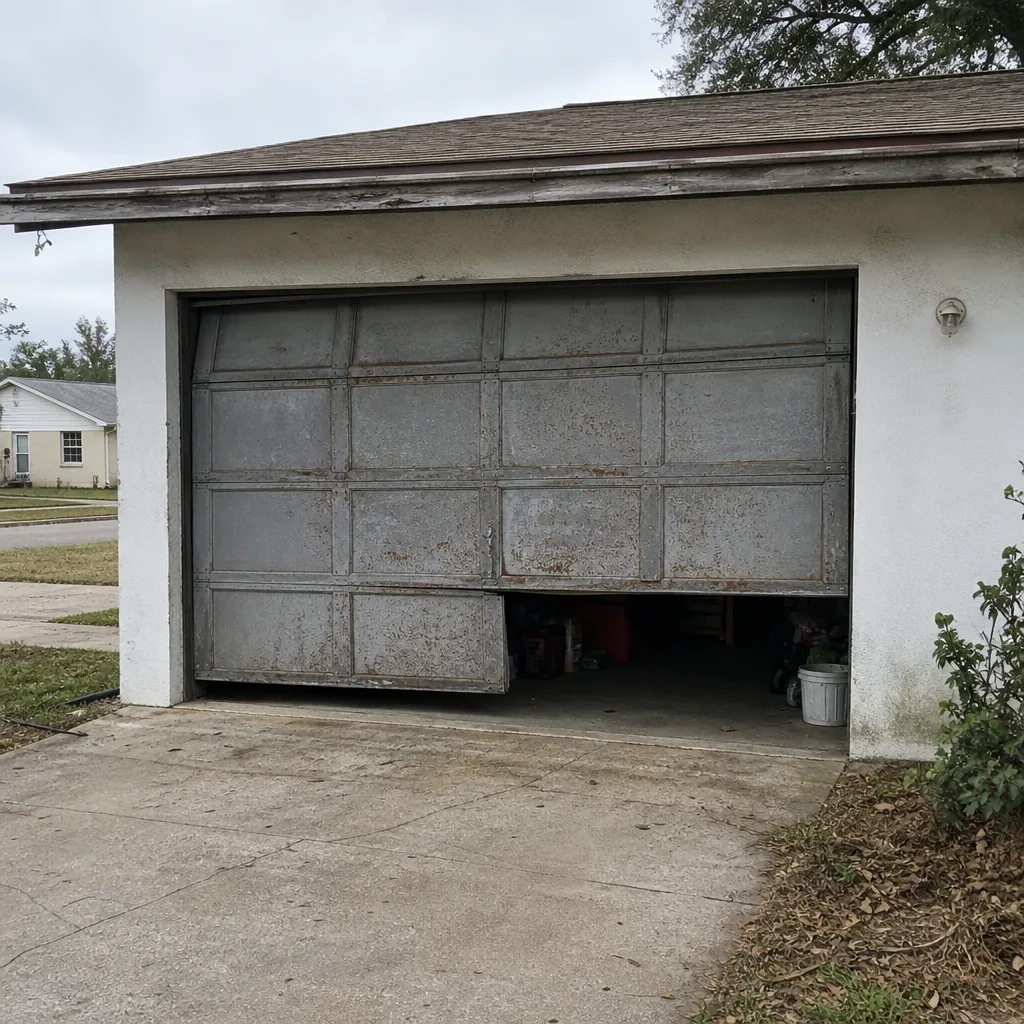 Before
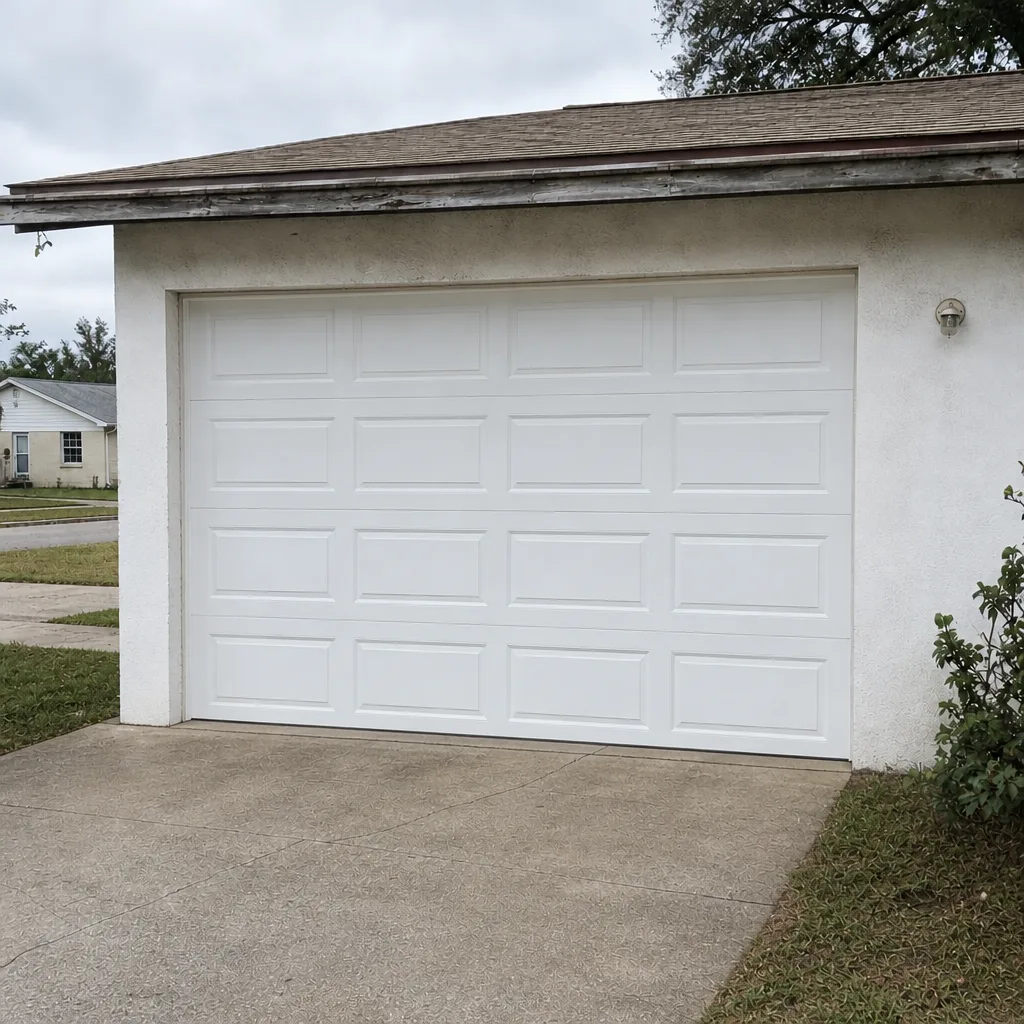 After
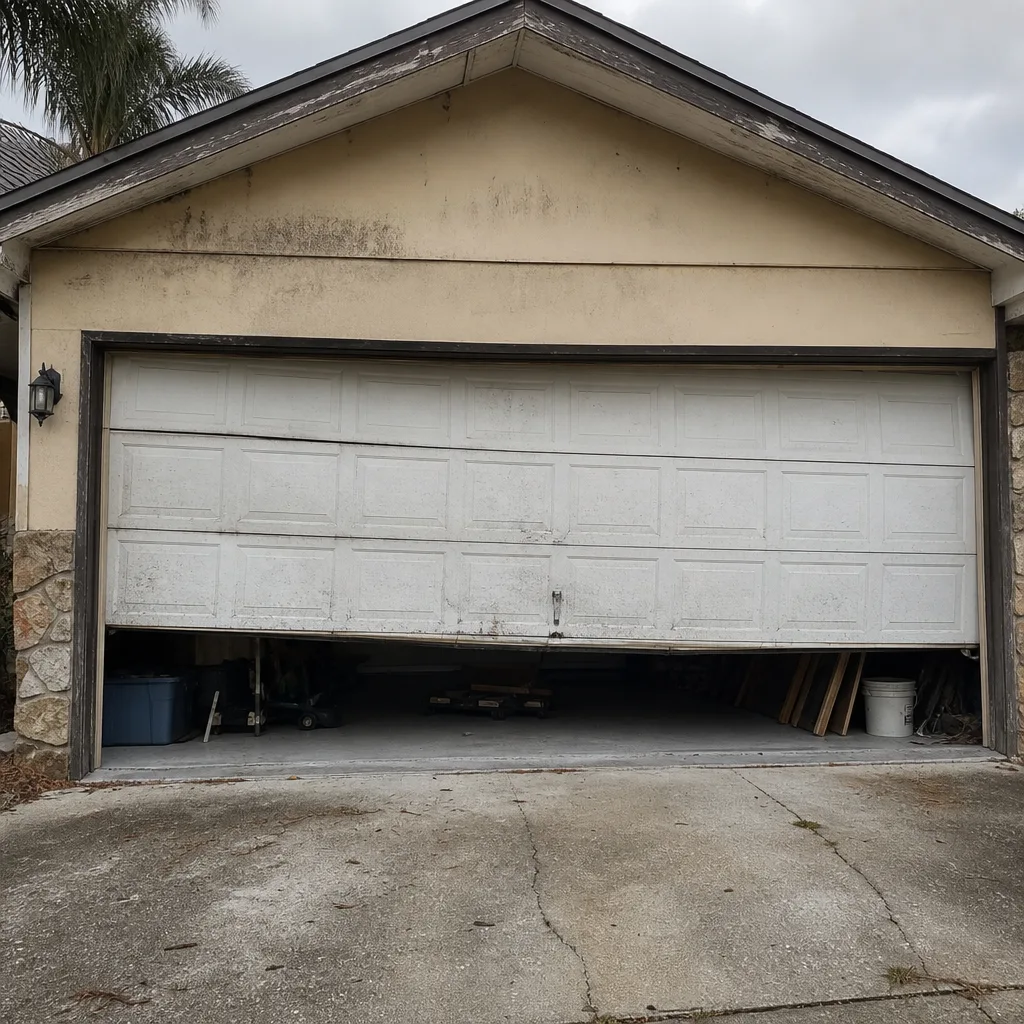 Before
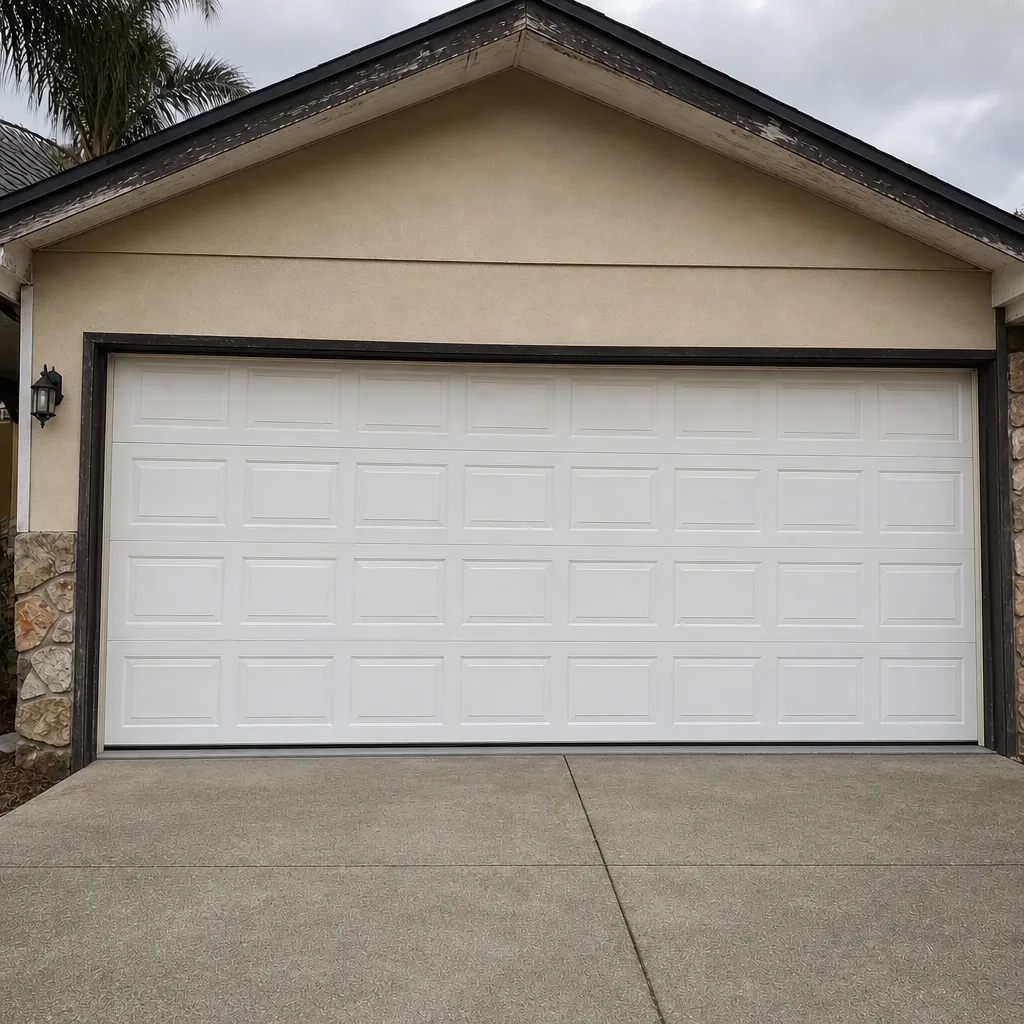 After
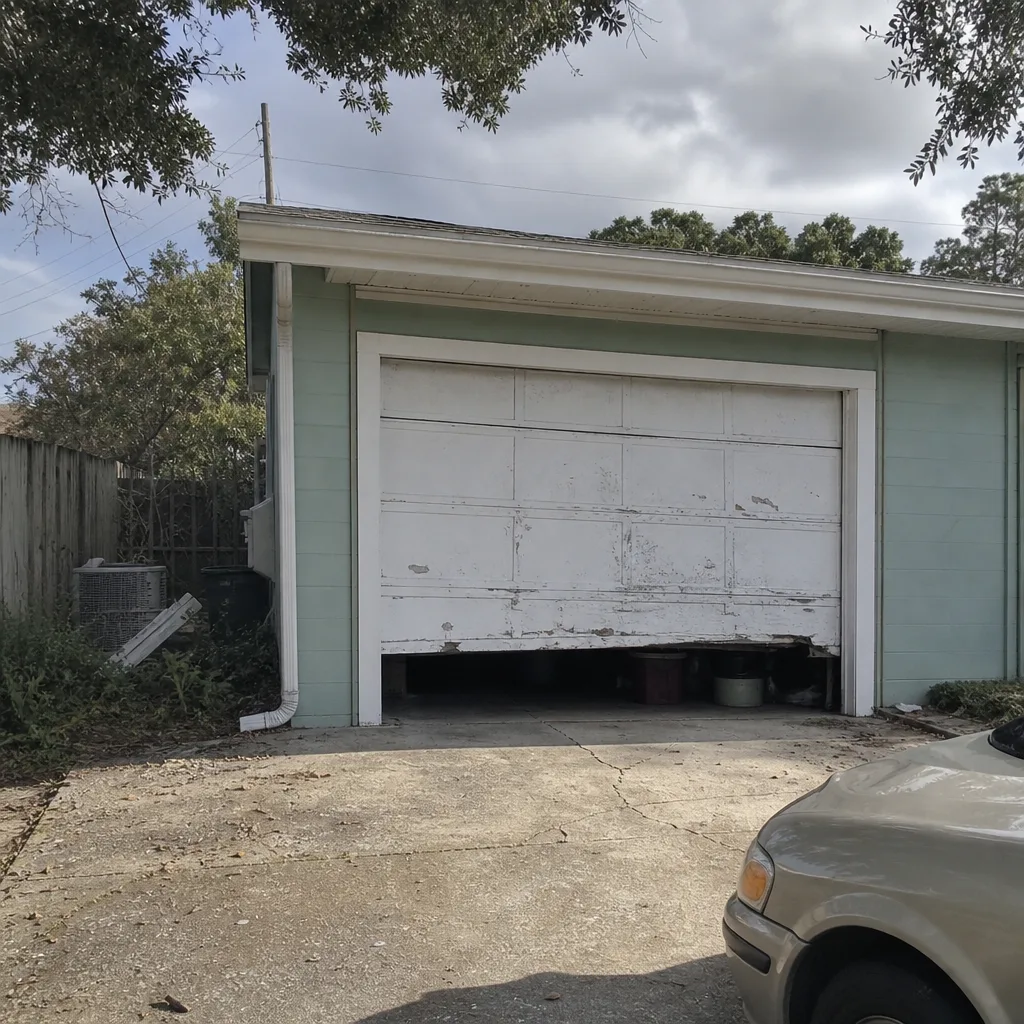 Before
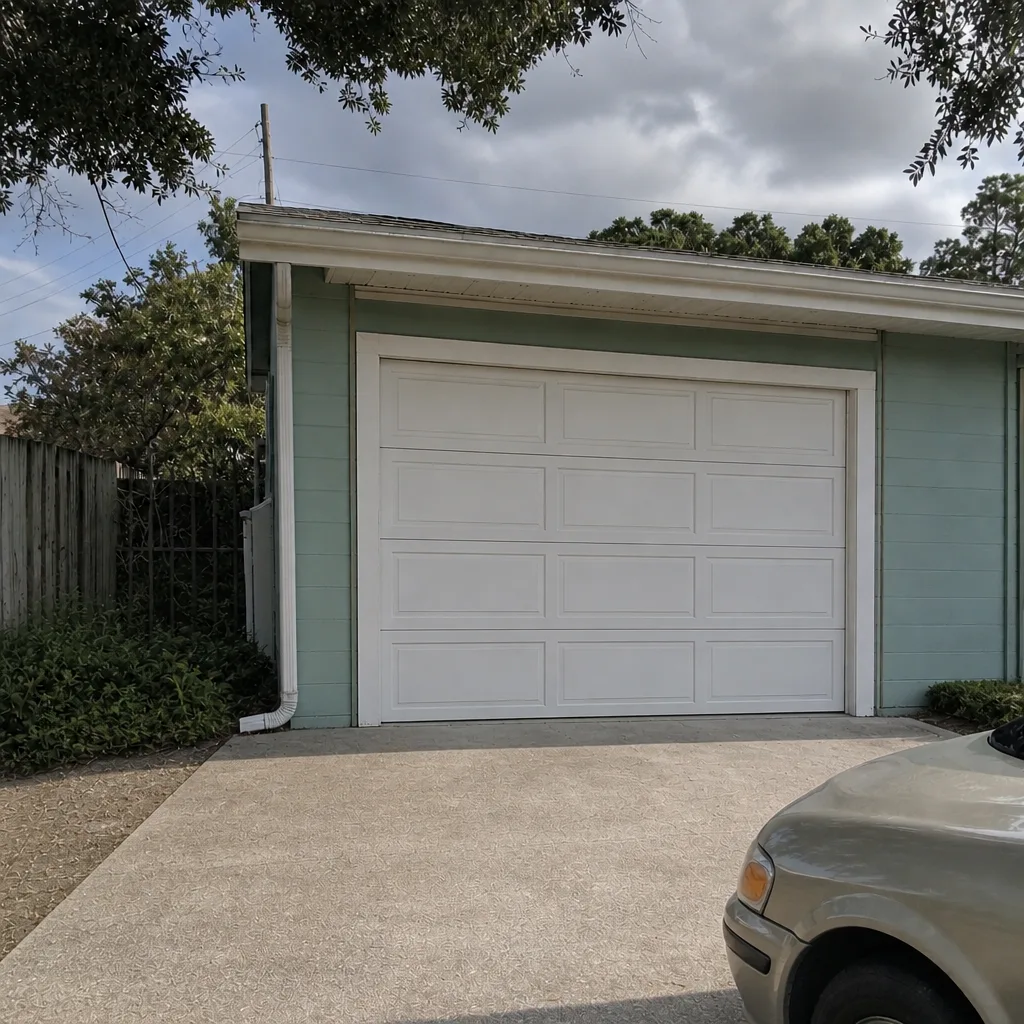 After
When to Call a Professional
Call a professional when a spring is broken, a cable is frayed, or the door is off its tracks, because those are the situations where DIY work risks serious injury. Call when the door reverses unexpectedly, when the opener runs but the door doesn’t move, or when you notice the door is noticeably heavier than usual. Call before you buy a door, since the wind rating and brand decision are easier to get right with a technician’s input. Call when you’re worried about the door’s wind rating or you’re unsure what the county requires.
Garage Door Repair Dunedin offers free estimates in Dunedin – call (877) 492-3256. We answer 24/7, with fast dispatch from 7am to 7pm, Sunday through Friday. The price is set per job by the written estimate, agreed before any work starts, so there are no surprises after the fact. Our technicians have up to 8 years of experience and work on LiftMaster, Chamberlain, Genie, Clopay, Amarr, Wayne Dalton, Craftsman, and Raynor equipment. For emergency situations, let us know right away.
Frequently Asked Questions
In Dunedin, most springs need replacing roughly every five to seven years, and some fail sooner on heavily used doors, because humidity and constant tension accelerate the corrosion and fatigue that cause failure. That’s shorter than the ten-to-twelve-year lifespan you’ll see quoted for drier climates. Watch for rust, a visible gap in the coil, or a door that suddenly feels very heavy. Call (877) 492-3256 for an exact quote on spring replacement – estimates are free.
In most cases near Dunedin’s coast and on exposed lots, yes, but the exact requirement depends on your property’s location. Most cities require a permit for garage door installation, and Pinellas County building officials can confirm the wind rating your address needs. Ask before you order. A door without a legible rating label is not a rated door, no matter what a salesperson says.
We prioritize stuck and broken doors, and we can often reach you the same day. Call (877) 492-3256. We answer 24/7, with fast dispatch from 7am to 7pm, Sunday through Friday. If your call comes outside dispatch hours, we’ll book you into the next opening, Sunday through Friday, 7am to 7pm.
No – the price is quoted and agreed before any work starts, and the written estimate sets the final price. We diagnose the issue and confirm the scope and price with you before touching anything, so you’re never surprised by the invoice. Call (877) 492-3256 for an exact quote – estimates are free.
We connect you with vetted, experienced local garage door professionals who are licensed and insured as their state requires. Our technicians have up to 8 years of experience and work only on garage doors, not as a side service to handyman work. That single-trade focus means your springs, tracks, and opener get checked by someone who works on them every day.
Pick the door by four criteria: wind rating for your address, a corrosion-resistant finish, insulation matched to your humidity and cooling needs, and an HOA-approved style in a color you can lock in writing. Clopay and Amarr publish panel and color lines that HOAs recognize, which simplifies the approval. Ask your city’s building department what the permit requires, and get the manufacturer’s spec sheet before you order.
The Bottom Line
Owning a garage door in Dunedin means planning for humidity, wind exposure, and shorter equipment life than the generic advice you’ll find online. The short version: buy wind-rated and insulated, read your HOA rules before your county code, keep the hardware clean and dry, and expect to replace springs, rollers, and hinges more often here than in drier climates. A yearly technician inspection is the most reliable way to avoid a breakdown. For any garage door repair, opener repair, spring work, or new door, Garage Door Repair Dunedin is here to help. Call (877) 492-3256 for a free estimate. We answer 24/7, with fast dispatch from 7am to 7pm, Sunday through Friday.
Written by the team at Garage Door Repair Dunedin.